

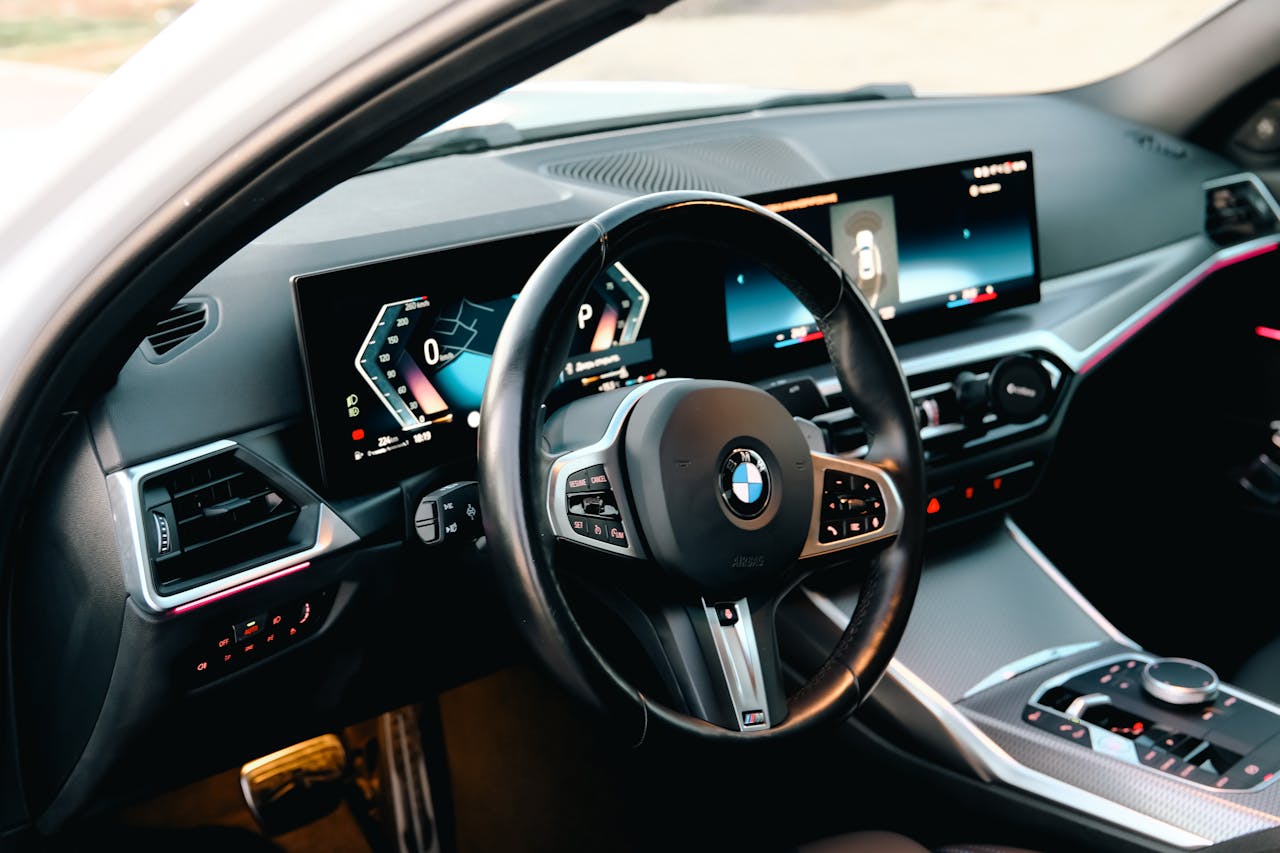
Comprehensive data compiled from extensive research across digital marketing channels, omnichannel strategies, and automotive industry reports
Key Takeaways
- Market explosion validates inventory automation investment – The logistics automation market is growing from $35.1 billion in 2024 to $139.5 billion by 2034 at a 14.8% CAGR, while retail automation will reach $64.09 billion by 2032, proving massive industry confidence in automation solutions
- Exceptional ROI delivers measurable business impact – Manufacturers implementing automation achieve 170-219% ROI over three years with payback periods under 18 months, while businesses saw a 250% average return on their AI investments
- Omnichannel strategies drive dramatically higher conversion – Companies using omnichannel approaches experience 89% higher customer retention rates and 287% increased purchase rates compared to single-channel campaigns, with 40.4% of all eCommerce sales attributed to omnichannel strategies
- Accuracy and efficiency improvements are transformative – Real-time inventory accuracy approaches 99%+ with automation compared to 63-65% in manual environments, while order processing speeds increase by 30% and throughput improves by 4x
- Automotive industry faces urgent adoption imperative – With 73% of retail shoppers using multiple channels and over 60% of automotive searches originating from mobile devices, dealerships without automated inventory feeds lose significant market share to digitally-savvy competitors
- Demand Local’s LinkOne Data Platform addresses critical gaps – By ingesting CRM, DMS, and inventory feeds to enable real-time audience matching and dynamic creative at scale, Demand Local solves the fragmented inventory advertising problem that wastes dealer budgets
Market Growth & Adoption Trends
1. The global inventory management automation market is valued at $5.9 billion in 2024. This substantial market valuation reflects widespread industry recognition of automation’s critical role in modern retail and manufacturing operations. The growth trajectory indicates businesses are prioritizing technological solutions to address supply chain complexity and consumer expectations for real-time inventory visibility.
2. The warehouse automation market grew from $21.42 billion in 2024 to $24.09 billion in 2025 at a 12.4% compound annual growth rate. This accelerated growth demonstrates increasing investment in automation technologies as businesses seek to address labor shortages and improve operational efficiency. The consistent double-digit growth rate validates automation as a strategic priority rather than a temporary trend.
3. The warehouse automation market will reach $42.25 billion by 2029 at a 15.1% compound annual growth rate. The increasing growth rate projection indicates accelerating adoption and expanding use cases for automation technologies. Businesses that delay implementation risk falling behind competitors who leverage automation for competitive advantage.
4. The logistics automation market is expected to reach $139.5 billion by 2034, growing at a 14.8% compound annual growth rate from $35.1 billion in 2024. This four-fold market expansion over a decade demonstrates the transformative impact of automation across the entire supply chain ecosystem. The massive growth creates opportunities for early adopters to establish market leadership positions.
5. The retail automation market will grow from $27.65 billion in 2025 to $64.09 billion by 2032 at a 12.90% compound annual growth rate. Retail’s rapid automation adoption reflects the need to compete with e-commerce giants and meet evolving consumer expectations for seamless shopping experiences. The projected market doubling indicates retailers view automation as essential for survival rather than optional enhancement.
6. 52% of warehouse facilities plan to increase spending on automation and robotics in 2025. This majority commitment to increased investment demonstrates that automation has moved from experimental to essential for operational competitiveness. The planned spending increase reflects confidence in automation’s proven ROI and strategic importance.
7. 42% of warehouse facilities earmark near-term artificial intelligence investments. The integration of AI with traditional automation represents the next evolution in inventory management sophistication. This investment focus indicates businesses recognize that basic automation is insufficient for maximizing competitive advantage.
8. Only 28% of manufacturers maintain formal digital strategies. This significant strategy gap represents a massive opportunity for businesses that implement comprehensive digital transformation plans. The low adoption rate despite widespread recognition of automation benefits creates a competitive moat for early adopters.
9. 85% of surveyed companies list warehouse management as a top operational priority. The overwhelming consensus on warehouse management importance validates the strategic focus on inventory automation. This priority ranking ensures continued investment and executive support for automation initiatives.
10. 76% of supply chain operations are affected by labor shortages. The persistent labor challenge accelerates automation adoption as businesses seek to maintain operational capacity despite workforce constraints. Automation provides a reliable solution to unpredictable labor market conditions.
Performance & ROI Benefits
11. Manufacturers implementing automation achieve 170-219% ROI over three years with payback periods under 18 months. This exceptional return on investment demonstrates that automation delivers immediate and substantial financial benefits. The short payback period reduces implementation risk and accelerates reinvestment in additional automation capabilities.
12. Businesses saw a 250% average ROI on their AI investments. The even higher ROI from AI-enhanced automation indicates that intelligent systems deliver superior performance compared to basic automation. This performance gap validates investment in advanced automation technologies with AI capabilities.
13. Real-time inventory tracking systems enable 30% faster order processing. The dramatic speed improvement directly impacts customer satisfaction and competitive positioning in an era of same-day and next-day delivery expectations. Faster processing reduces operational costs while improving service levels.
14. On-time delivery performance improves 25% through inventory automation. The significant delivery improvement builds customer trust and reduces costly expedited shipping requirements. Consistent on-time delivery becomes a competitive differentiator that drives customer loyalty and retention.
15. Quality control expenses decrease approximately 50% in documented implementations. The substantial cost reduction in quality control demonstrates automation’s impact beyond basic operational efficiency. Reduced quality issues simultaneously improve customer satisfaction and reduce warranty costs.
16. Manufacturing facilities implementing automation report throughput improvements of 4x. The four-fold capacity increase enables businesses to handle significantly higher volumes without proportional increases in space or labor. This throughput advantage supports revenue growth without corresponding operational cost increases.
17. Automation reduces errors by 20-50% compared to traditional methods. The dramatic error reduction improves customer satisfaction while reducing costly correction processes. Fewer errors translate directly to higher operational efficiency and improved customer retention.
Omnichannel Marketing Impact
18. 73% of retail shoppers engage with multiple channels during their shopping journey, utilizing an average of six touchpoints before making a purchase. This multi-channel behavior makes inventory feed automation essential for maintaining consistent messaging and availability across all customer touchpoints. Dealerships without synchronized inventory data risk losing customers to competitors with accurate, real-time information.
19. Companies implementing omnichannel strategies experience an 89% increase in customer retention rates. The dramatic retention improvement demonstrates that seamless cross-channel experiences build stronger customer relationships. Inventory feed automation enables this consistency by ensuring accurate product availability across all channels.
20. Omnichannel marketing campaigns lead to a 287% increase in purchase rates compared to single-channel campaigns. The nearly three-fold conversion improvement validates omnichannel investment and demonstrates the power of coordinated messaging across multiple touchpoints. Inventory automation ensures that promotional messages align with actual availability.
21. 40.4% of eCommerce sales are attributed to omnichannel strategies in 2025. This substantial sales attribution demonstrates that omnichannel has become the dominant shopping paradigm rather than a niche approach. Businesses without omnichannel capabilities effectively cede nearly half of potential eCommerce revenue.
22. Omnichannel consumers shop 1.7 times more frequently than single-channel shoppers. The increased purchase frequency demonstrates that omnichannel experiences drive deeper customer engagement and loyalty. Inventory feed automation supports this engagement by enabling consistent, accurate information across all touchpoints.
23. Approximately 27% of retail sales come from consumers who interact with brands across multiple channels. This significant revenue stream validates omnichannel investment and demonstrates the financial impact of coordinated cross-channel strategies. Inventory synchronization ensures that these valuable multi-channel customers receive consistent information.
24. 76% of brands view omnichannel campaigns as essential for growth. The overwhelming consensus among brands validates omnichannel as a strategic imperative rather than optional enhancement. Inventory feed automation provides the foundational data consistency required for effective omnichannel execution.
25. Omnichannel strategies drive 80% higher incremental store visits. The substantial increase in physical store traffic demonstrates that digital channels effectively drive offline sales. Accurate inventory information ensures that store visits result in successful transactions rather than disappointed customers.
Accuracy & Efficiency Improvements
26. Real-time inventory accuracy approaches 99%+ in optimized implementations using RFID and IoT sensors, compared to 63-65% accuracy in manual environments. The 35+ percentage point accuracy improvement eliminates costly stockouts and overstock situations. This precision enables just-in-time inventory management and reduces carrying costs.
27. 50% of inventory and pricing checks will be handled by robots or automation by 2025. The rapid automation adoption for basic inventory tasks frees human workers for higher-value activities while improving data accuracy. Automated checks eliminate human error and ensure consistent data collection.
28. Retailers plan to automate 70% of their daily retail store tasks by 2025. The comprehensive automation plan demonstrates recognition that manual processes cannot meet modern retail demands. Inventory feed automation serves as the foundation for this broader operational transformation.
29. 553,052 industrial robot installations occurred globally in 2022, reflecting a 5% year-on-year growth. The massive scale of robot deployment demonstrates automation’s mainstream adoption across global manufacturing and logistics operations. This infrastructure investment creates the foundation for advanced inventory management capabilities.
30. Only approximately one-third of manufacturers have achieved robot deployment on more than 50% of production lines. The limited deployment despite massive potential indicates significant opportunity for businesses that accelerate automation implementation. Early adopters gain substantial competitive advantages through improved efficiency and accuracy.
31. Hardware dominates the logistics automation component segment with 64.6% market share. The hardware focus reflects the physical nature of inventory management and the need for robust infrastructure to support automation. This investment creates the foundation for software-driven optimization and intelligence.
32. Retail & E-commerce leads the logistics automation end-user segment with 30.2% market share. The retail dominance validates the critical importance of inventory automation for consumer-facing businesses. The high market share reflects retail’s direct exposure to consumer expectations for accurate inventory information.
33. Large enterprises lead the organization size segment with 58.4% market share. The enterprise adoption demonstrates that inventory automation delivers substantial value at scale. However, this also creates opportunities for smaller businesses to gain competitive advantages through strategic automation implementation.
Future Trends & AI Integration
34. Over 80% of businesses have integrated AI into their operations, with 35% using AI across multiple departments. The widespread AI adoption demonstrates recognition of artificial intelligence’s transformative potential for business operations. AI-enhanced inventory management delivers superior forecasting and optimization capabilities.
35. The AI market in logistics is expected to grow to $8 billion. The substantial AI market size validates artificial intelligence as a critical component of future logistics and inventory management systems. This investment focus indicates that basic automation is insufficient for maximizing competitive advantage.
36. Global spending on cloud services will reach $482 billion in 2025. The massive cloud investment enables scalable, flexible inventory management systems that can adapt to changing business needs. Cloud infrastructure provides the foundation for real-time data synchronization across multiple channels.
37. North America leads the logistics automation market with 36.8% share, totaling $12.92 billion. The North American market leadership reflects the region’s advanced technology adoption and sophisticated supply chain requirements. This market position creates opportunities for businesses that leverage automation for competitive advantage.
38. Mobile commerce will constitute 62% of all eCommerce sales by 2027. The mobile dominance requires inventory systems that can deliver real-time accuracy to mobile shoppers. Businesses without mobile-optimized inventory feeds risk losing the majority of future eCommerce customers.
39. Click-and-collect sales are projected to reach $154.3 billion in 2025, representing 19.9% of multichannel e-commerce sales. The massive click-and-collect market requires precise inventory visibility to ensure successful order fulfillment. Accurate inventory feeds prevent disappointing customer experiences when items are unavailable for pickup.
Automotive Industry Applications
40. Over 60% of all automotive searches originate from mobile devices. The mobile dominance requires automotive dealerships to maintain accurate, real-time inventory information accessible through mobile channels. Outdated inventory information on mobile platforms directly impacts lead generation and sales.
41. Order Management software applications capture 32.1% of the growth share in logistics automation. The focus on order management reflects the critical importance of accurate inventory information for successful order fulfillment. Automotive dealerships require similar capabilities to manage vehicle inventory and customer orders effectively.
42. Transportation Management dominates the function segment with 56.8% market share. The transportation focus validates the importance of integrated inventory and logistics management for automotive businesses. Accurate inventory feeds enable better transportation planning and customer delivery expectations.
FAQs on Inventory Feed Automation Statistics
Q: What’s the primary benefit of inventory feed automation for automotive dealerships?
A: The primary benefit is eliminating wasted advertising spend on unavailable vehicles while ensuring accurate, real-time inventory information across all marketing channels. Demand Local’s LinkOne Data Platform specifically addresses this by ingesting CRM, DMS, and inventory feeds to enable real-time audience matching and dynamic creative at scale, ensuring ads always reflect current inventory. This integration prevents the common problem of advertising vehicles that have already been sold, which frustrates customers and wastes marketing budgets. Dealerships see immediate improvements in cost-per-lead and conversion rates when inventory data synchronizes with advertising campaigns.
Q: How does inventory feed automation impact marketing ROI?
A: Inventory feed automation dramatically improves marketing ROI by eliminating wasted impressions on sold vehicles and enabling precise targeting of available inventory. Manufacturers implementing automation achieve 170-219% ROI over three years with payback periods under 18 months. For automotive specifically, dealerships have achieved 43% reduction in cost-per-lead through inventory-integrated campaigns. The automation ensures that every marketing dollar promotes vehicles actually available for purchase, maximizing campaign efficiency and conversion rates.
Q: Is inventory feed automation suitable for small businesses or independent dealers?
A: Absolutely, and the technology is increasingly accessible to businesses of all sizes. While large enterprises currently lead adoption with 58.4% market share, Demand Local’s solutions are designed to scale from single-point dealerships to multi-rooftop auto groups. Rapid implementation and no startup fees make automation accessible regardless of business size, delivering immediate benefits in advertising efficiency and inventory turnover. Small dealers often see proportionally greater benefits as they eliminate manual processes and compete more effectively with larger operations.
Q: What kind of data integration is required for effective inventory feed automation?
A: Effective inventory feed automation requires integration with existing CRM, DMS, and inventory management systems to ensure real-time data synchronization across all marketing channels. Demand Local’s LinkOne Data Platform integrates with major systems including Eleads, VinSolutions, CDK, and DealerVault, minimizing manual file uploads. The integration creates a single source of truth for inventory data that automatically updates across search, display, social, and video advertising platforms. Most implementations complete within days rather than weeks, with minimal disruption to existing operations.
Q: How does Demand Local ensure data privacy with inventory feeds?
A: Demand Local prioritizes data security with secure APIs and advanced encryption that keep your data safe at every stage of transmission and storage. The platform adheres to global privacy standards including GDPR and CCPA while enabling privacy-safe data handling for first-party audience creation. This secure infrastructure empowers campaigns with both reliability and results while protecting sensitive customer and inventory information from unauthorized access. Regular security audits and compliance certifications ensure ongoing protection of dealership and customer data.
Q: What metrics should I track to measure the success of automated inventory campaigns?
A: Focus on sales-driven metrics rather than just clicks, including cost-per-lead (CPL), vehicle-detail-page (VDP) views, sales match-back rates, and inventory turnover velocity. Demand Local’s proprietary attribution reporting provides ad influence insights and delivers ROI tracking that ties marketing spend directly to vehicle sales. These metrics enable data-driven optimization decisions that maximize campaign performance and dealership profitability. Track trends over time to identify seasonal patterns and optimize budget allocation across channels and vehicle segments.