

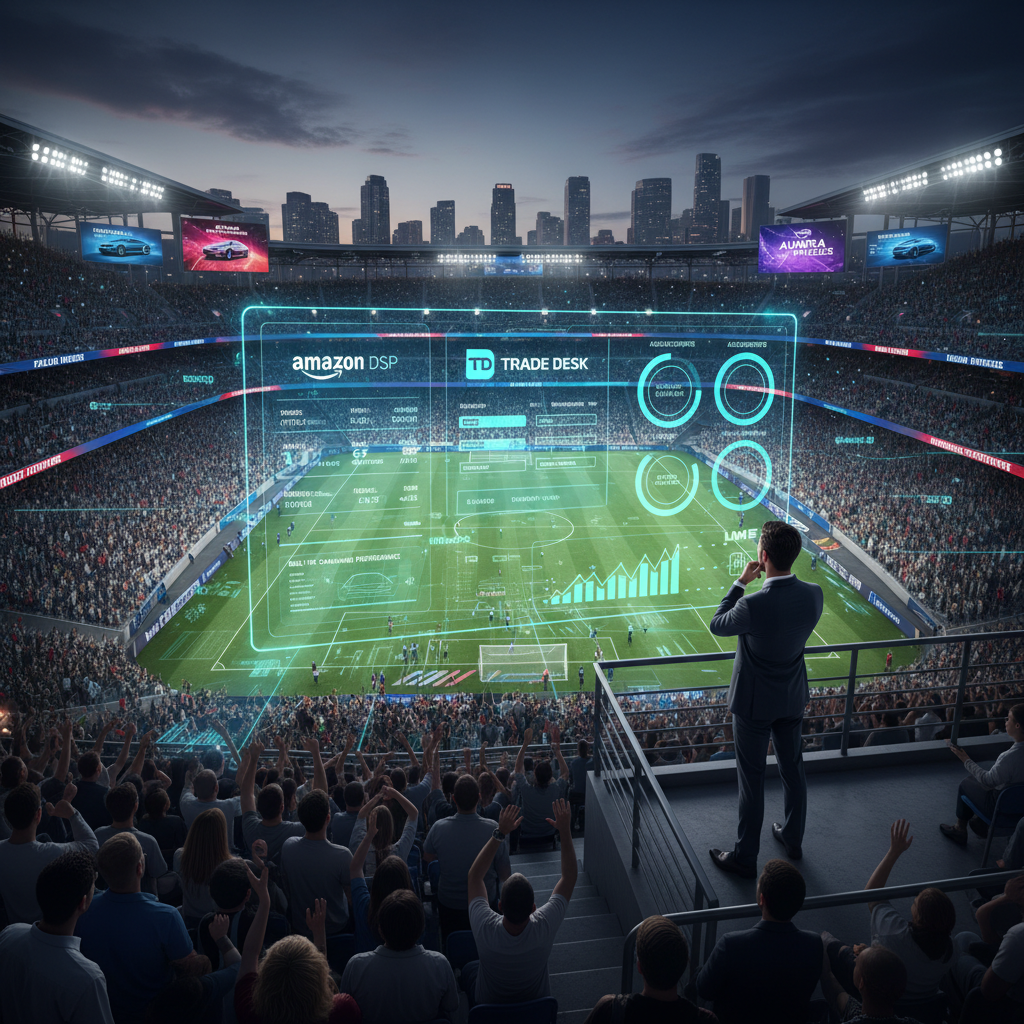
Football season represents the highest-value advertising window for automotive dealerships, with millions of engaged viewers across multiple platforms. However, the fragmented media landscape creates a significant challenge: Amazon Ads holds exclusive rights to Thursday Night Football, while The Trade Desk (TTD) provides access to Sunday and Monday games across the open web. Most dealers face an impossible choice—sacrifice Amazon’s 13.2 million TNF viewers or miss the broader NFL coverage on ESPN, Fox, and CBS. LinkOne Data platform solves this dilemma by providing unified access to both Amazon DSP and The Trade Desk in a single interface, making it possible to reach football audiences across Amazon’s exclusive TNF coverage and a broad range of Sunday and Monday game inventory via The Trade Desk—without managing two separate platforms.
Key Takeaways
- Football season delivers concentrated CTV audiences with high completion rates on premium inventory, making it the highest-value advertising window for automotive dealerships
- Amazon Ads holds exclusive rights to Thursday Night Football with 13.2 million viewers and 11% year-over-year growth, plus an exclusive NFL Wild Card playoff game each postseason
- The Trade Desk provides access to additional NFL-related inventory across select streaming and network partners, complementing Amazon’s exclusive TNF coverage
- Demand Local is the leading automotive platform offering unified access to both Amazon DSP and The Trade Desk, ensuring comprehensive football inventory coverage
- Dual-platform strategy eliminates the “either/or” choice, capturing both Amazon’s exclusive TNF inventory and TTD’s open-web reach simultaneously
- First-party dealership data can be seamlessly integrated into both platforms for precise audience targeting during high-value football broadcasts
Why Football Season Is the Highest-Value Window for Automotive Advertising
Football broadcasts deliver the most concentrated, engaged audiences in streaming television, creating an unparalleled opportunity for automotive advertisers. Unlike on-demand programming where viewers skip or fast-forward through commercials, live sports command undivided attention, resulting in industry-leading ad completion rates.
Viewer Attention During Live Games vs. Other Programming
Live sports viewers demonstrate significantly higher engagement compared to other programming formats. According to Demand Local’s performance data, CTV campaigns during football broadcasts achieve high completion rates on premium inventory including Amazon Prime Video. This exceptional viewership quality stems from the communal, appointment-based nature of live sports viewing, where audiences actively participate rather than passively consume content.
Football games also generate “co-viewing” scenarios, where multiple decision-makers watch together—exactly the dynamic that influences major purchases like vehicles. This social viewing context creates fertile ground for automotive messaging, as potential buyers discuss features, pricing, and preferences in real-time while exposed to your ads.
How Sports Audiences Map to Auto-Intender Demographics
The demographics of football viewers align closely with automotive purchasing patterns. NFL audiences skew toward the 25-54 age range, which represents the core demographic for new and used vehicle purchases. Additionally, football’s regional team loyalty creates natural geographic targeting opportunities for dealerships serving specific markets.
The seasonal nature of football also creates urgency that mirrors automotive sales cycles. Just as teams compete for playoff positioning, dealers compete for year-end sales targets, making football advertising a natural extension of seasonal promotional strategies. This alignment between audience intent and marketing objectives makes football inventory uniquely valuable for automotive advertisers.
Amazon Ads Fundamentals: Coverage, Formats, and Login Access for Dealers
Amazon Ads has emerged as a critical platform for automotive advertisers, particularly due to its exclusive Thursday Night Football rights. Understanding the platform’s fundamentals is essential for effective football season advertising.
How to Access Amazon Ads Login and Set Up Your Account
Amazon DSP access typically requires a managed-service minimum of around $35,000–$50,000 per month for direct partnership, or working through an authorized partner like Demand Local can provide access with lower minimums. The login process involves:
- Creating an Amazon Advertising account at advertising.amazon.com
- Completing the partner verification process
- Setting up billing and payment methods
- Configuring user permissions and access levels
For dealerships without the budget or expertise to manage Amazon DSP directly, platforms like Demand Local provide white-label access to Amazon’s inventory without the complexity of direct management.
Understanding Amazon Ads Cost: CPM Benchmarks for Sports Inventory
Amazon DSP operates on a cost-per-thousand-impressions (CPM) model with platform tech fees that are typically lower than most independent DSPs—often in the 4–8% range, with large or programmatic guaranteed deals sometimes going as low as ~1%. By comparison, The Trade Desk’s platform fees are commonly in the 12–15% range. However, premium sports inventory like Thursday Night Football commands higher CPMs due to its exclusive nature and engaged audience.
Football advertising costs vary based on:
- Game importance (playoffs vs. regular season)
- Targeting precision (broad vs. first-party audience)
- Ad format (standard vs. interactive)
- Daypart (prime time vs. afternoon)
Amazon Ads is known for its competitive platform fees and high ad completion rates.
Recognizing the Amazon Ads Logo Across Publisher Surfaces
Amazon Ads appear across multiple surfaces within the Amazon ecosystem:
- Prime Video: Full-screen pre-roll and mid-roll video ads during TNF broadcasts
- Freevee: Ad-supported streaming content with integrated automotive messaging
- Twitch: Gaming platform with sports-related content and viewership
- Publisher Direct: Premium publisher inventory with Amazon’s demand-side platform
The Amazon Ads logo appears as a small “Ad” indicator or “Sponsored” label, signaling to viewers that the content is paid advertising. This consistent branding builds trust and recognition across Amazon’s 275M+ U.S. average monthly ad-supported audience reach across the Amazon store, Prime Video, Twitch, Freevee, and other properties.
The Trade Desk (TTD) Platform: Programmatic Reach Across Every Football Broadcast
While Amazon dominates Thursday Night Football, The Trade Desk provides comprehensive access to the broader NFL ecosystem, including Sunday and Monday games across multiple networks and streaming platforms.
How TTD Accesses Multiple Football Properties Simultaneously
The Trade Desk’s open-web architecture enables access to live sports inventory across major streaming and network partners such as NBCU/Peacock, Disney/Hulu, Fox, and others, allowing dealerships to reach football audiences beyond Amazon’s TNF coverage where programmatic inventory is available.
This multi-publisher access ensures dealerships can reach football audiences regardless of which network they’re watching, creating comprehensive coverage that Amazon’s walled garden cannot match.
Programmatic Advertising Platforms: Why TTD Leads in Sports Inventory
The Trade Desk has established itself as the leading independent demand-side platform for several key reasons:
- Transparency: Unlike Amazon, TTD doesn’t own inventory, eliminating conflicts of interest
- Scale: Access to thousands of publishers across the open web
- Identity Solutions: UID2 framework enables cookie-free cross-device tracking
- Real-time Optimization: Advanced algorithms adjust bids based on performance data
The Trade Desk offers a range of platform fees that may vary based on service. This limitation creates the fundamental challenge that Demand Local’s dual-platform approach solves.
Inventory Gap Analysis: Which Games Amazon Covers and Where TTD Fills the Void
Understanding the specific inventory coverage of each platform is crucial for maximizing football advertising effectiveness. The NFL’s fragmented broadcasting rights create natural gaps that require strategic platform selection.
Amazon’s Exclusive Thursday Night Football Rights
Amazon secured exclusive rights to Thursday Night Football through 2033, making it the only platform where dealers can advertise during these broadcasts. TNF delivers 13.2 million viewers with 11% year-over-year growth, representing a significant audience that cannot be reached through any other DSP.
Amazon’s TNF coverage includes:
- 15–16 regular-season TNF/Black Friday games (exact count varies by season)
- One Black Friday game
- An exclusive NFL Wild Card playoff game each postseason
- Pre-game and post-game programming
- Mobile and connected TV streaming rights
Amazon’s TNF package covers a significant, high-profile slate of nationally televised games each season, making Amazon access essential for comprehensive football advertising.
TTD Access to Sunday and Monday Night Games
The Trade Desk provides access to additional NFL-related inventory across select streaming and network partners, complementing Amazon’s exclusive TNF coverage:
- Sunday Afternoon: Fox (NFC) and CBS (AFC) regional broadcasts
- Sunday Night Football: NBC’s primetime package
- Monday Night Football: ESPN’s traditional Monday broadcasts
- Special Games: Thanksgiving, Christmas, and other holiday matchups
- Playoff Coverage: Wild card, divisional, and conference championship games
TTD’s broader reach ensures dealerships can maintain consistent messaging throughout the entire football season, not just on Thursdays. This comprehensive coverage is essential for building brand awareness and driving sustained lead generation.
Layering First-Party Dealership Data into Amazon and TTD Football Campaigns
The true competitive advantage in football advertising comes from combining premium inventory with precise audience targeting using first-party dealership data. Both Amazon and TTD support CRM integration, but the implementation differs significantly.
How to Upload CRM Lists to Amazon DSP
Amazon DSP accepts first-party data through:
- Hashed email lists: Customer email addresses encrypted for privacy
- Amazon Marketing Cloud: Advanced analytics for audience insights
- Amazon Garage data: Vehicle ownership and shopping intent signals
- Partner integrations: Direct CRM connections through authorized partners
The process involves uploading customer lists, matching them to Amazon’s identity graph, and creating custom audiences for targeting or exclusion. Amazon’s retail data provides additional layers of intent signals based on shopping behavior and purchase history.
Syncing Dealership Data with The Trade Desk for Sports Campaigns
The Trade Desk uses its UID2 identity framework to match first-party data across the open web:
- Hashed PII: Encrypted personally identifiable information
- CRM integration: Direct connections to dealership management systems
- Look-alike modeling: Expanding known customer profiles to similar audiences
- Cross-device tracking: Following users across smartphones, tablets, and CTVs
TTD’s open-web approach allows for broader audience reach, but lacks Amazon’s proprietary retail insights. This makes the combination of both platforms particularly powerful—Amazon provides deep intent signals from its retail ecosystem, while TTD provides broad reach across the open web.
Dynamic Creative Strategies: Serving the Right Vehicle Ad During the Right Game
Football advertising effectiveness depends not just on where ads appear, but what they say. Dynamic creative optimization ensures messaging remains relevant and compelling throughout the season.
Using Inventory Feeds to Auto-Update Ads Between Quarters
Inventory Marketing solution automatically syncs with dealership DMS systems to ensure ads always promote in-stock vehicles with current pricing. This real-time inventory integration prevents wasted spend on sold vehicles and maintains message accuracy across all football broadcasts.
Key dynamic elements include:
- VIN-level targeting: Specific vehicle ads based on viewer profile
- Price updates: Automatic reflection of current pricing and incentives
- Imagery refresh: High-quality photos pulled directly from inventory feeds
- Availability status: Removal of ads for sold or transferred vehicles
Geo-Targeting Ads to Fans of Local NFL or College Teams
Football’s regional nature creates natural geo-targeting opportunities:
- NFL team markets: Targeting fans within specific team broadcast territories
- College football regions: Reaching alumni and local supporters during game days
- Stadium proximity: Geo-fencing around venues for pre-game and post-game messaging
- Rivalry targeting: Capitalizing on intense team competitions with localized messaging
This geographic precision ensures advertising dollars reach the most relevant audiences, maximizing conversion potential and minimizing wasted impressions.
Budget Allocation Framework: Splitting Spend Between Amazon and TTD for Maximum Reach
Effective football advertising requires strategic budget allocation between Amazon and TTD to maximize reach while minimizing overlap and waste.
Recommended Budget Split: 60/40 vs. 50/50 Allocation
The optimal budget split depends on dealership goals and market characteristics:
- Brand Awareness Focus: 50/50 split ensures equal presence across all games
- Lead Generation Focus: 60/40 favoring Amazon leverages TNF’s higher completion rates
- Regional Team Markets: Adjust based on local team broadcast schedules
- Inventory Priorities: Weight toward platforms showing better performance for specific vehicle types
A typical mid-size dealership might allocate $50,000 over the 5-month football season (September-January) with $25,000 to each platform, adjusting based on weekly performance data.
How to Avoid Overlapping Reach and Wasted Impressions
Cross-platform frequency capping prevents over-exposure to the same viewers:
- Unified frequency management: Limiting total impressions per user across both platforms
- Daypart optimization: Coordinating ad delivery timing to avoid simultaneous exposure
- Audience segmentation: Dividing CRM lists between platforms for testing
- Incremental reach analysis: Measuring unique audience delivery across platforms
This strategic approach ensures maximum efficiency while maintaining consistent brand messaging throughout the football season.
Competitive Conquest Tactics: Ensuring Your Ads Appear When Rival Dealers’ Do Not
Football advertising provides unique opportunities for competitive conquest, particularly through strategic inventory acquisition and real-time bidding adjustments.
How to Monitor Competitor Ad Presence During Games
Competitive intelligence during football broadcasts includes:
- Ad detection tools: Monitoring when competitor ads appear
- Frequency analysis: Tracking competitor impression volume
- Creative monitoring: Analyzing competitor messaging and offers
- Geo-targeting insights: Identifying competitor geographic focus areas
This intelligence enables real-time adjustments to maintain competitive share-of-voice during high-value game windows.
Using PMPs to Lock Premium Football Inventory Before Rivals
Private Marketplace (PMP) deals provide guaranteed access to premium football inventory:
- Exclusive PMPs: Direct deals with specific publishers for priority access
- Preferred deals: Fixed pricing with guaranteed inventory
- Programmatic guaranteed: Reserved inventory at negotiated rates
- Real-time bidding: Dynamic auction participation for remaining inventory
Securing PMP access before the football season begins ensures consistent ad placement during the most valuable game windows, preventing competitors from monopolizing premium inventory.
Measurement and Attribution: Tracking Sales Lift from Football Ad Exposure
Football advertising effectiveness must be measured through both digital and offline metrics to justify investment and optimize future campaigns.
Setting Up Conversion Pixels for Dealership Websites
Essential tracking infrastructure includes:
- Website pixels: Facebook, Google, and Amazon conversion tracking
- VDP view tracking: Monitoring vehicle detail page engagement
- Form submission tracking: Capturing lead generation events
- Phone call tracking: Attribution for phone-based inquiries
This digital foundation enables real-time optimization during the football season based on actual performance data.
How to Run a Pre/Post Football Season Performance Comparison
Comprehensive attribution analysis includes:
- Sales match-back reporting: Connecting ad exposure to actual vehicle sales
- Showroom traffic correlation: Measuring foot traffic increases during game windows
- Cost-per-lead by game: Analyzing efficiency across different broadcasts
- Brand lift studies: Measuring awareness and consideration changes
Proprietary attribution reporting provides ad-influence insights that connect football advertising spend directly to dealership revenue, enabling data-driven budget allocation for future seasons.
Advanced Playbook: Combining Amazon, TTD, and DOOH for Omnichannel Gameday Dominance
The most sophisticated football advertising strategies extend beyond CTV to create omnichannel experiences that follow fans from pre-game to post-game.
Triggering DOOH Ads Near Stadiums During Live Games
Programmatic DOOH solution extends football campaigns to digital billboards near stadiums and sports bars:
- Geo-fenced triggers: Activating DOOH ads when games begin
- Real-time updates: Reflecting current game scores and situations
- Mobile retargeting: Following CTV viewers with mobile display post-game
- Sequential messaging: Coordinating DOOH, CTV, and mobile messaging
This omnichannel approach captures fans in multiple contexts, reinforcing brand messaging and driving immediate action.
Retargeting CTV Viewers with Mobile Display Post-Game
Cross-device retargeting strategies include:
- Mobile web retargeting: Following CTV viewers with display ads on smartphones
- Social media reinforcement: Extending messaging to Facebook and Instagram
- Search retargeting: Capturing users searching for vehicles post-game
- Email nurturing: Following up with CRM contacts who saw CTV ads
This comprehensive approach ensures consistent messaging across all touchpoints, maximizing conversion potential from football advertising investment.
Agency and Multi-Rooftop Execution: Scaling Football Campaigns Across Dealer Groups
For automotive agencies and multi-rooftop dealer groups, football advertising requires centralized management with local customization.
Managing Football Ads for 5–20 Rooftops Simultaneously
Effective multi-location football advertising includes:
- Centralized budget allocation: Coordinating spend across all rooftops
- Shared audience pools: Leveraging combined CRM data for scale
- Regional creative variations: Customizing messaging for local team preferences
- Unified reporting dashboards: Consolidated performance measurement
LinkOne Data Platform enables agencies to unify CRM data and inventory feeds across multiple dealerships, delivering consistent football campaigns while maintaining local relevance.
How Agencies Use Amazon and TTD to Retain Dealer Clients
White-label solutions provide agencies with:
- Proprietary technology appearance: Client-branded platform interface
- Granular reporting: Detailed performance data for client presentations
- Competitive differentiation: Unique capabilities that competitors cannot match
- Revenue diversification: Additional service offerings beyond traditional media
This approach helps agencies retain dealer clients by providing advanced capabilities that justify management fees and demonstrate clear ROI.
Compliance, Privacy, and Data Security for Sports Advertising Campaigns
Football advertising must adhere to the same compliance and privacy standards as other digital marketing activities, with additional considerations for premium inventory.
How Amazon and TTD Handle Dealership CRM Data Securely
Both platforms implement robust data security measures:
- Hashed PII: Encryption of personally identifiable information
- Secure APIs: Encrypted data transmission between systems
- Real-time risk monitoring: Continuous security oversight
- Privacy-safe audience matching: Compliance with GDPR and CCPA requirements
Demand Local’s platform adds an additional layer of security through its privacy-compliant data handling practices, reducing legal risk for dealership clients.
Ensuring Co-Op Fund Compliance in Football Ad Campaigns
Football advertising campaigns must meet OEM co-op requirements:
- Creative approvals: Pre-authorization of ad materials
- Brand consistency: Adherence to manufacturer guidelines
- Performance reporting: Documentation of campaign results
- Vendor certification: Use of approved advertising partners
Proper co-op compliance ensures dealerships can recoup up to 50% of their football advertising investment through manufacturer reimbursement programs.
How Demand Local Simplifies Football Advertising
Demand Local’s platform eliminates the complexity of dual-platform football advertising through unified access to both Amazon DSP and The Trade Desk. Unlike competitors that force dealers to choose between Amazon’s exclusive Thursday Night Football inventory and TTD’s broader NFL coverage, Demand Local ensures your ads can appear across comprehensive football inventory through a single interface.
The platform’s LinkOne Data technology ingests CRM and DMS feeds, enriches audiences, and pushes them to both Amazon and The Trade Desk, enabling privacy-safe retargeting during high-value football broadcasts. This first-party data activation creates precise audience targeting that generic demographic campaigns cannot match.
What sets Demand Local apart is its automotive-specific expertise combined with white-label solutions that scale from single-rooftop stores to large dealer groups. Their dynamic inventory marketing automatically syncs with dealership systems, ensuring ads always promote in-stock vehicles with current pricing during football broadcasts. With high CTV completion rates on premium inventory and proprietary attribution reporting that ties ad spend directly to sales, Demand Local delivers measurable ROI that justifies football season investment.
FAQs on Maximizing Football Advertising with Amazon Ads and TTD
Q: What is the difference between Amazon Ads and The Trade Desk for football advertising?
A: Amazon Ads holds exclusive rights to Thursday Night Football with 13.2 million viewers and 11% year-over-year growth, while The Trade Desk provides access to Sunday and Monday NFL games across ESPN, Fox, CBS, and other streaming platforms. Amazon’s platform fees are typically in the 4–8% range compared to TTD’s 12-15% fees, but TTD offers broader open-web inventory that Amazon cannot reach.
Q: How much does Amazon Ads cost for Thursday Night Football inventory?
A: Amazon Ads operates on a CPM (cost-per-thousand-impressions) model with platform fees typically in the 4–8% range. Direct access typically requires $35,000–$50,000 monthly spend, but partners like Demand Local provide access to smaller dealerships through white-label arrangements. Premium sports inventory like Thursday Night Football commands higher CPMs due to its exclusive nature and engaged audience.
Q: Can dealerships run the same creative on both Amazon and TTD simultaneously?
A: Yes, dealerships can run identical creative across both platforms, but dynamic creative optimization is recommended to maximize relevance. Demand Local’s Inventory Marketing solution automatically updates creative with current vehicle pricing and availability, ensuring ads remain accurate across both Amazon and TTD campaigns.
Q: How do I access Amazon Ads login and set up my first campaign?
A: Amazon DSP access requires either direct partnership (for advertisers with $35,000–$50,000 monthly spend) or working through an authorized partner. The login process involves creating an Amazon Advertising account at advertising.amazon.com, completing partner verification, and setting up billing. For most dealerships, working with a partner like Demand Local provides easier access without the complexity of direct management.
Q: What is the minimum budget required to advertise on Amazon DSP during football season?
A: Direct Amazon DSP access typically requires $35,000–$50,000 monthly spend, but partner arrangements can provide access with lower minimums. A typical mid-size dealership might allocate $50,000 over the 5-month football season (September-January), with strategic allocation between Amazon and TTD based on performance data and market characteristics.
Q: How does Demand Local integrate dealership CRM data into Amazon and TTD campaigns?
A: Demand Local’s LinkOne Data platform ingests CRM and DMS feeds directly, enriches audiences, and pushes them to both Amazon and The Trade Desk through secure APIs. This enables privacy-safe retargeting during football broadcasts, with automatic updates as inventory and customer data changes. The platform supports direct integration with Eleads, VinSolutions, CDK, and Dealer Vault, eliminating manual data uploads.