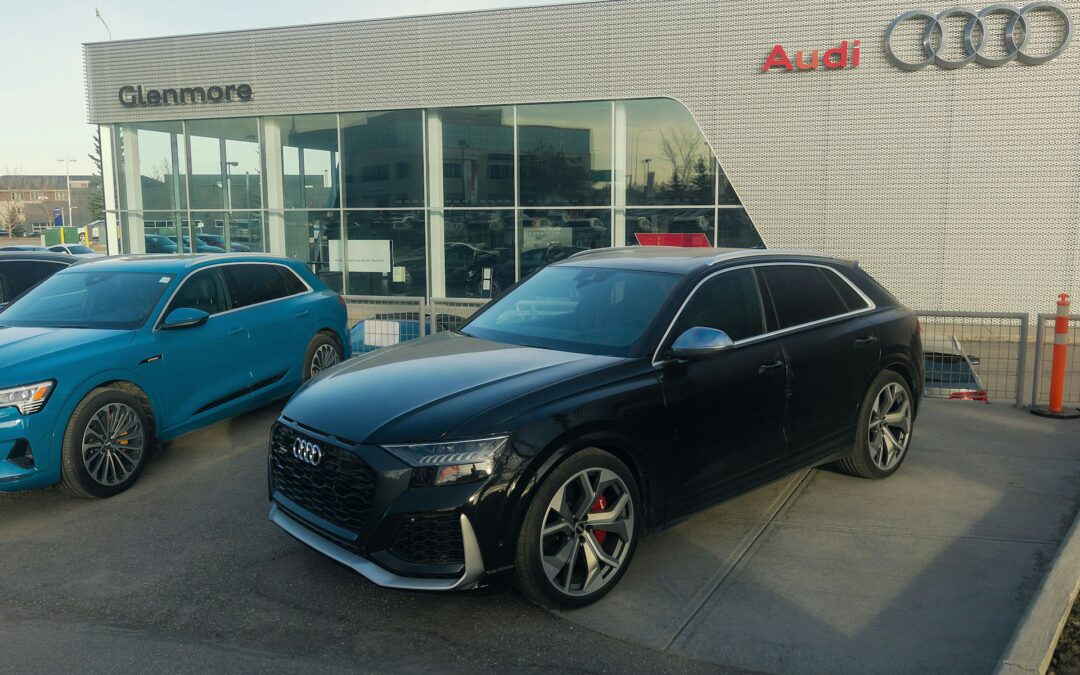


Comprehensive data on automotive inventory efficiency, market dynamics, and digital solutions for optimizing dealership performance
Key Takeaways
- Massive efficiency gap exists between current and optimal turnover – While the gold standard is turning inventory every 30 days (ratio of 12), the current U.S. average is every 63 days (ratio of 5.8), representing more than double the optimal timeframe and millions in tied-up capital
- Inventory levels have surged post-pandemic – New-vehicle inventory averaged 2.3 million monthly in 2024, up 32% from previous levels, creating both opportunity and increased competition for dealerships
- Brand performance varies dramatically – Toyota and Lexus turn inventory in 44-45 days while Stellantis and Audi exceed 130 days—a nearly 3x difference that impacts profitability and market positioning
- EV inventory presents unique challenges – New EVs spent an average of 85 days on lots in 2024 (24 days longer than 2023), requiring specialized marketing approaches to accelerate movement
- Digital solutions drive measurable results – Demand Local clients achieved 43% reduction in cost-per-lead and sold 12 aged EV units within weeks using targeted digital campaigns, demonstrating the power of precision marketing
- Data-driven inventory management is critical – With industry-wide days’ supply reaching 90 days by December 2025, dealerships leveraging first-party data and real-time analytics gain significant competitive advantages
Inventory Turnover Fundamentals
Understanding the Gold Standard
1. The gold standard inventory turnover ratio for dealerships is 12, meaning inventory turns every 30 days. This benchmark represents optimal efficiency where vehicles move quickly enough to minimize holding costs while maintaining sufficient stock to meet customer demand. Dealerships achieving this standard maximize profitability through reduced depreciation, lower floorplan interest, and improved cash flow. The 30-day cycle aligns with consumer expectations for fresh inventory and competitive pricing.
2. According to a CDK Global report cited by Demand Local, average U.S. auto dealer inventory turnover in late 2023 was every 63 days (ratio of approximately 5.8). This performance gap of over 100% compared to the gold standard represents significant lost opportunity and increased costs. The extended holding period exposes dealerships to accelerated depreciation, higher financing costs, and reduced showroom appeal. Bridging this gap requires strategic pricing, targeted marketing, and data-driven inventory management.
3. The average inventory turnover ratio for auto manufacturers was 7.87% in Q2 2024 (nearly 8 complete turnovers annually). While manufacturers operate at a different scale than retail dealerships, their performance provides context for industry efficiency standards. The manufacturer ratio falls between the dealership gold standard and current average, highlighting the systemic inefficiencies in retail inventory management. This gap underscores the need for better coordination between manufacturing, distribution, and retail operations.
Days’ Supply Metrics
4. New-vehicle days’ supply was 85 days in November 2024, which is 14% higher compared to the same time last year. The year-over-year increase demonstrates the ongoing inventory normalization following pandemic-era shortages. While increased inventory provides more consumer choice, it also intensifies competition and pricing pressure. Dealerships must adapt their marketing strategies to stand out in this increasingly crowded marketplace.
5. It is considered a warning sign for auto sales if dealerships begin carrying substantially more than 60 days worth of inventory. This threshold serves as a critical performance indicator that signals potential overstocking and market misalignment. Exceeding this benchmark increases financial risk through higher carrying costs and accelerated depreciation. Proactive inventory management becomes essential when approaching this warning level.
Current Market Inventory Dynamics
Inventory Volume Trends
6. New-vehicle inventories climbed to approximately 2.8 million units by the end of June 2025, up from 2.5 million at the start of May. This 12% monthly increase reflects both manufacturing recovery and changing market demand patterns. The rapid inventory growth creates both opportunity and challenge—more vehicles available for customers but increased competition among dealerships. Strategic marketing becomes essential to differentiate inventory in this expanding marketplace.
7. New-vehicle inventory reached 3.04 million units in November 2024, up 29% year over year. The substantial year-over-year growth indicates a return to pre-pandemic inventory levels and beyond. This volume increase provides consumers with greater selection but intensifies competitive pressures among dealerships. Efficient inventory turnover becomes even more critical as supply normalizes and consumer choice expands.
8. Total U.S. new-vehicle inventory averaged 2.3 million cars monthly in 2024, up 32% from previous levels. This significant increase represents a fundamental shift from the inventory-constrained environment of recent years. Dealerships must adapt their operational and marketing strategies to succeed in this new reality of abundant supply. The 32% growth creates both opportunity for increased sales volume and risk of overstocking without proper demand forecasting.
Pricing Implications
9. New-car average transaction prices stabilized at $49,175 in 2024, 29% higher than 2019 levels. This significant price increase reflects both inflation and the premium features now standard in new vehicles. Higher prices can impact turnover rates as consumers become more price-sensitive and deliberate in their purchasing decisions. Dealerships must balance pricing strategies with inventory movement objectives to maintain healthy turnover.
10. Average listing price for new vehicles reached $49,422 in December 2025, up 1.4% year over year. The continued price growth, even as inventory normalizes, indicates sustained pricing power in the new vehicle market. However, this trend may create affordability challenges that impact turnover rates, particularly for non-essential or luxury models. Strategic pricing and promotional strategies become essential for maintaining sales velocity.
11. Used-car prices dropped 4.9% to $28,819 in 2024. This price decline reflects increased supply and changing market dynamics in the used vehicle segment. Lower prices can accelerate turnover by improving affordability and value perception among consumers. Dealerships should leverage this pricing environment to move used inventory efficiently while maintaining appropriate margins.
Brand-Specific Performance Metrics
Efficient Inventory Managers
12. Toyota and Lexus maintain days’ supply near 44-45 days, well below the national average of 90 days. This exceptional performance demonstrates superior inventory management, demand forecasting, and brand desirability. The nearly 50% better efficiency compared to the industry average translates to significant competitive advantages in cash flow, depreciation management, and customer satisfaction. Other brands can learn from Toyota’s disciplined approach to inventory alignment.
13. Honda days’ supply was approximately 57 days in June 2024, below the industry average. This strong performance reflects Honda’s balanced approach to inventory management and consistent consumer demand. While not matching Toyota’s efficiency, Honda maintains healthy turnover that minimizes carrying costs while ensuring adequate supply. The brand’s performance demonstrates that mainstream manufacturers can achieve above-average inventory efficiency with proper planning.
14. BMW maintains a balanced approach with days’ supply below the 90-day average. This performance is particularly impressive for a premium brand, where higher prices and specialized models can complicate inventory management. BMW’s efficient turnover reflects strong brand positioning, effective dealer network coordination, and responsive production planning. The brand demonstrates that premium positioning doesn’t have to sacrifice inventory efficiency.
Inventory Challenges
15. Stellantis (Jeep, Ram, Chrysler) days’ supply exceeded 130 days in December 2025. This significantly elevated level indicates potential overproduction, changing consumer preferences, or competitive pressures in key segments. The 44% higher days’ supply compared to the industry average creates substantial financial pressure through increased carrying costs and depreciation risk. Strategic marketing and pricing adjustments become critical for improving turnover.
16. Audi days’ supply also exceeded 130 days in December 2025, among the highest for luxury brands. This performance challenges the traditional luxury brand advantage of limited supply creating exclusivity. The extended holding period increases depreciation risk and reduces showroom freshness, potentially impacting brand perception. Audi dealerships require targeted marketing strategies to accelerate inventory movement while maintaining brand positioning.
17. New-vehicle inventory had a 71-day supply, the highest in two years. This peak level reflects the ongoing inventory normalization following pandemic-era constraints. The elevated days’ supply creates both opportunity for consumer choice and challenge for dealerships managing carrying costs. Strategic inventory management becomes essential to balance selection with efficiency in this evolving market environment.
Electric Vehicle Inventory Challenges
EV-Specific Turnover Issues
18. New EVs spent an average of 85 days on lots in 2024, 24 days longer than 2023. This significant increase reflects changing market dynamics including increased supply, evolving consumer preferences, and competitive pressures in the EV segment. The extended holding period exposes dealerships to accelerated depreciation and higher carrying costs. Specialized marketing approaches become essential for moving EV inventory efficiently.
19. EV inventory increased 64% year-over-year in 2024, representing a 490% increase from 2022 levels. This explosive growth reflects both manufacturing ramp-up and changing market strategies among automakers. The substantial inventory increase creates both opportunity for consumer choice and significant challenge for dealerships managing this specialized product category. Targeted marketing becomes critical for differentiating EV offerings in this rapidly expanding segment.
Used Vehicle Inventory Metrics
Used Vehicle Turnover Standards
20. Used vehicles should be sold within 45 days to control depreciation. This benchmark reflects the accelerated depreciation curve that affects used vehicles, particularly in the first few months of ownership. Exceeding this timeframe significantly increases financial risk through lost value and extended carrying costs. Dealerships must implement aggressive marketing and pricing strategies to maintain this optimal turnover window.
21. Best practice requires 50% of aged inventory held maximum 30 days from acquisition. This standard ensures that dealerships maintain fresh, desirable inventory while minimizing exposure to rapid depreciation. The 30-day threshold for half of aged inventory creates a disciplined approach to used vehicle management that balances selection with efficiency. Dealerships adhering to this standard maintain competitive advantage in used vehicle profitability.
22. Used vehicles averaged 50 days on lots in Q3 2025, down from 55 days earlier in the year. This improvement reflects both market conditions and enhanced inventory management practices among dealerships. The 5-day reduction demonstrates that proactive inventory strategies can yield measurable improvements in turnover efficiency. Continued focus on used vehicle turnover remains essential as market conditions evolve.
Omnichannel Marketing Impact
23. Total new-vehicle inventory opened June 2024 at 2.89 million units, up 55% more than a year ago. This substantial increase creates intense competition that requires sophisticated marketing approaches to stand out. Demand Local’s smarter omnichannel marketing combines search, social, video, and connected TV to ensure inventory appears everywhere potential buyers are researching. This comprehensive approach maximizes visibility in an increasingly crowded marketplace.
24. Sales consultant turnover dropped from 85% to 67% in 2021, improving operational stability. While this human resource metric may seem unrelated to inventory turnover, stable sales teams contribute to consistent customer experience and improved sales efficiency. Demand Local’s real-time optimization capabilities complement stable operations by ensuring marketing efforts are always aligned with current inventory and market conditions, creating a complete solution for inventory management success.
FAQs on Vehicle Inventory Turnover Statistics
Q: What is considered a healthy inventory turnover rate for a car dealership?
A: The gold standard inventory turnover ratio for dealerships is 12, meaning inventory turns every 30 days. However, the current U.S. average is every 63 days (ratio of approximately 5.8). While the 30-day benchmark represents optimal efficiency, dealerships should focus on continuous improvement toward this standard based on their specific market conditions, brand mix, and business objectives.
Q: How can digital marketing improve my dealership’s inventory turnover?
A: Digital marketing solutions like Demand Local’s auto-inventory marketing can dramatically improve turnover by ensuring your specific vehicles appear in front of in-market buyers. The platform achieved a 43% reduction in cost-per-lead for clients by integrating Vehicle Listing Ads with SEM, while also selling 12 aged EV units within weeks using targeted display and CTV campaigns. These data-driven approaches ensure marketing spend directly supports inventory movement goals. By targeting the right audiences with the right vehicles at the right time, dealerships can accelerate sales velocity and reduce holding costs.
Q: What are the biggest challenges affecting vehicle inventory turnover today?
A: Current challenges include the post-pandemic inventory surge (32% increase in 2024), EV-specific turnover issues (85 days on average in 2024), and significant brand performance disparities (Toyota at 44 days vs. Stellantis at 130+ days). Additionally, with industry-wide days’ supply reaching 90 days by December 2025, dealerships face increased competition and pricing pressure that requires sophisticated marketing approaches to overcome.
Q: How important is first-party data for optimizing inventory turnover?
A: First-party data is critical for inventory optimization, as demonstrated by Demand Local’s LinkOne Data platform which ingests CRM, DMS, and inventory feeds to create real-time audience matching. This approach ensures marketing efforts target the most relevant buyers for available inventory, reducing wasted impressions and improving conversion rates. With 84% of dealerships owning digital tools but only 30% actively using them effectively, data-driven inventory management represents a significant competitive opportunity.
Q: What strategies work best for moving aged inventory?
A: The most effective strategies combine targeted digital advertising with strategic pricing. Demand Local’s inventory marketing uses custom rules based on price and days-on-lot to automatically promote aged vehicles through dynamic ads across search, social, and video platforms. Best practices require 50% of aged inventory to be held maximum 30 days from acquisition, with used vehicles ideally sold within 45 days to control depreciation. These data-driven approaches ensure aged inventory receives the marketing attention needed to accelerate movement while maximizing profitability.