
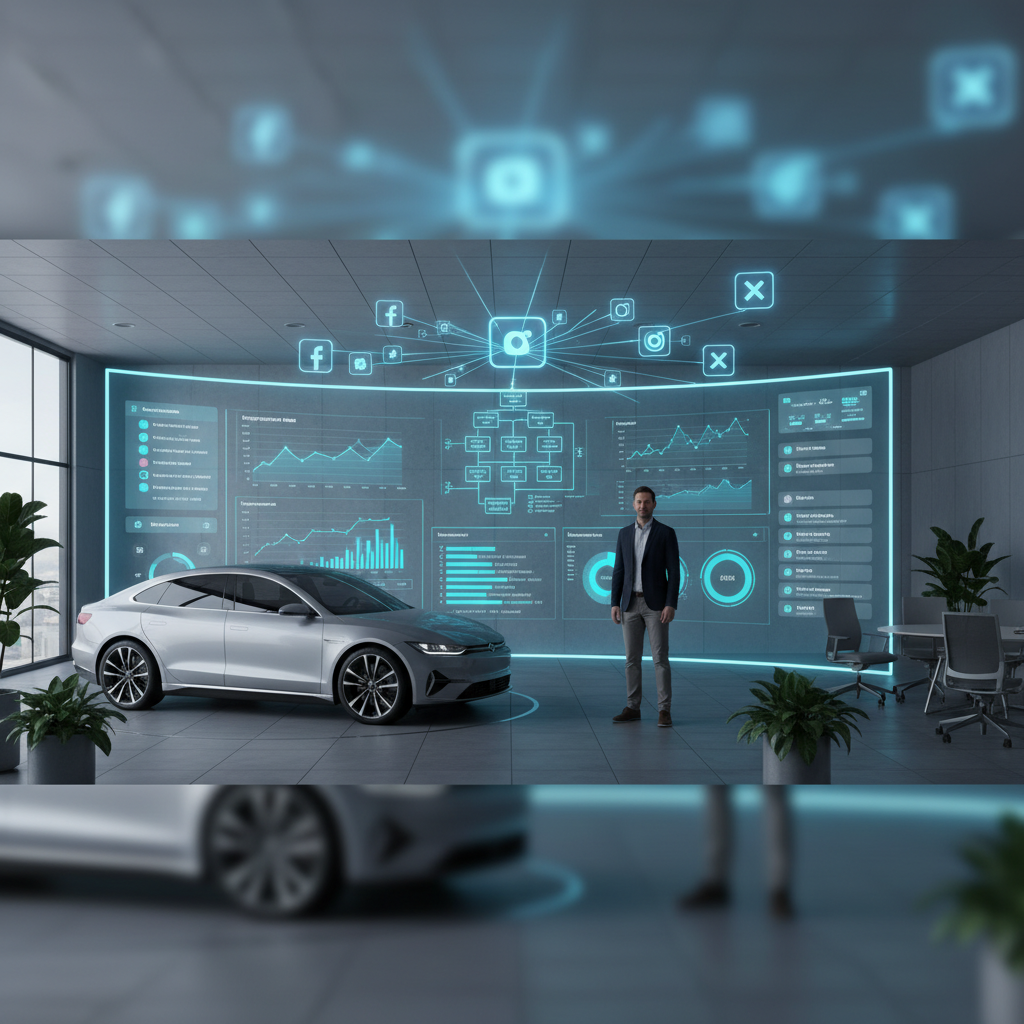
Your prospect just commented on your Instagram post about a new vehicle arrival. Does your sales team know? If not, you’re leaving significant revenue on the table. In today’s hyper-connected automotive market, social media can’t operate as a siloed megaphone for broadcasting messages—it must function as an intelligent data source that enriches every other marketing channel. The disconnect between social engagement and actual sales follow-up costs dealerships thousands in missed opportunities monthly. With platforms like Demand Local’s LinkOne Data platform, this integration becomes not just possible but profitable, connecting first-party data directly into Meta to build custom and look-alike audiences that outperform generic targeting.
Key Takeaways
- Social media integration requires connecting platforms to CRM/DMS systems to create unified customer profiles, not just posting content across channels
- Campaigns using 3+ channels deliver 287% higher purchase rates compared to single-channel approaches
- Strong omnichannel brands achieve 89% customer retention versus only 33% for weak omnichannel competitors
- Omnichannel customers demonstrate 30% higher lifetime value than single-channel customers
- First-party data integration into social platforms reduces cost-per-lead by enabling hyper-targeted audience segmentation
- Proper attribution tracking connects social media engagement directly to showroom visits and vehicle sales
Understanding Omnichannel Marketing: Reaching Customers Everywhere They Are
Omnichannel marketing transcends the basic concept of multichannel presence. While multichannel marketing involves being active across different platforms—social media, email, search, display advertising—omnichannel marketing creates a seamless, unified experience where customer interactions flow naturally between channels with consistent messaging and complete context preservation.
The fundamental difference lies in data integration. Multichannel operates in silos: your social team doesn’t know what your email team sent yesterday, and your sales team has no visibility into which social posts prospects are engaged with. Omnichannel breaks down these barriers, creating a single customer view that follows individuals across every touchpoint of their journey.
For automotive dealerships, this means when a customer engages with your Facebook post about a specific SUV model, that interaction should trigger relevant follow-up across other channels—perhaps a targeted email with additional specifications, a retargeting ad showing similar vehicles, or even a personalized text message from their sales consultant referencing their specific interest.
Defining the Complete Customer Journey
95% of vehicle buyers research online before ever stepping into a dealership. They might:
- Discover your dealership through Instagram Stories showcasing new arrivals
- Research specific models on your website after clicking a Facebook ad
- Compare pricing through Google search and vehicle listing ads
- Watch your Connected TV commercials during streaming shows
- Finally visit the showroom after seeing a programmatic DOOH ad near your location
Without omnichannel integration, each of these touchpoints operates independently, forcing customers to repeat their interests and preferences at every interaction. With proper integration, your team gains complete visibility into the customer’s journey, enabling personalized, efficient service that accelerates the sales process.
The Power of Social Media in Your Omnichannel Strategy
Social media serves as both a discovery channel and a rich data source in your omnichannel mix. Unlike traditional advertising channels that primarily push messages out, social platforms create two-way conversations that generate valuable customer insights.
The strategic value of social media integration includes:
- Real-time engagement data revealing which vehicles, features, and messaging resonate most with your audience
- Audience segmentation opportunities based on actual interests and behaviors rather than assumptions
- Community building that establishes trust and brand loyalty before purchase
- Customer service integration where social inquiries flow directly into your CRM for proper follow-up
- User-generated content that provides authentic social proof for other potential buyers
For automotive dealerships specifically, social media platforms like Facebook and Instagram offer unique opportunities through features like Shops and lead generation forms. However, these tools only deliver maximum value when integrated with your existing customer data systems.
Leveraging Social Platforms for Customer Insights
When properly integrated, social media interactions provide rich data points for your marketing strategy:
- Which vehicle photos generate the most saves and shares
- What pricing information prompts the most questions
- Which service promotions drive the highest engagement
- What content formats (video vs. carousel vs. single image) perform best
This data should inform not just your social strategy but your entire marketing approach, from email content to search advertising keywords to in-dealership displays.
Designing a Cohesive Social Media Marketing Strategy for Omnichannel Success
Creating an effective omnichannel social media strategy requires moving beyond platform-specific tactics to develop a unified approach that aligns with your overall business objectives.
Developing a Unified Content Strategy
Start by mapping your customer journey and identifying where social media fits within each stage:
- Awareness Stage: Educational content about vehicle features, comparisons, and lifestyle benefits
- Consideration Stage: Detailed specifications, customer testimonials, and financing options
- Decision Stage: Limited-time offers, inventory updates, and service promotions
- Retention Stage: Service reminders, loyalty programs, and user-generated content opportunities
Your content calendar should ensure consistent messaging across all channels while adapting format appropriately for each platform. A vehicle launch announcement might appear as:
- A detailed blog post on your website
- A carousel post on Instagram highlighting key features
- A short-form video on TikTok showing the vehicle in action
- A targeted Facebook ad with lead generation form
- A follow-up email to existing customers who previously showed interest in similar models
Aligning Social Media Goals with Overall Business Objectives
Your social media metrics should directly support broader business goals:
- Inventory Management: Track engagement on specific vehicle posts to identify high-interest models
- Lead Generation: Measure cost-per-lead from social campaigns compared to other channels
- Customer Retention: Monitor service-related social inquiries and resolution rates
- Brand Awareness: Track share of voice compared to competitor dealerships in your market
Driving Conversions with Smart, Automated Social Ad Campaigns
Automation transforms social media from a manual, time-intensive channel into a scalable, high-performing component of your omnichannel strategy. The key lies in connecting your inventory and customer data directly to your social advertising platforms.
Best Practices for Social Media Advertising
Effective automotive social advertising requires:
- Dynamic creative optimization that automatically showcases vehicles based on real-time inventory
- Audience retargeting that follows website visitors with relevant vehicle ads
- Look-alike audience expansion that finds new prospects similar to your best customers
- Cross-device tracking that connects mobile social engagement to desktop research and in-store visits
Demand Local’s Facebook Dynamic Ads and Google Vehicle Ads solution automates this process by creating auto-generated carousel and Vehicle Listing Ad units that pull directly from your inventory feed. This ensures accuracy while reducing wasted impressions on out-of-stock vehicles.
Automating Campaign Efficiency
Smart automation includes:
- Budget optimization that shifts spend toward highest-performing ad sets in real-time
- Creative rotation that tests different messaging and imagery automatically
- Audience refinement that excludes recent purchasers and focuses on in-market shoppers
- Performance triggers that pause underperforming campaigns and scale successful ones
This automation layer, powered by AI-driven performance tracking, ensures continuity in tactics and ad messaging while maximizing return on ad spend.
Integrating First-Party Data for Precision Social Media Targeting
The true power of omnichannel social media comes from integrating your first-party data—CRM lists, DMS records, and service history—directly into your social advertising platforms.
Leveraging CRM/DMS Data for Social Ads
When you connect your dealership’s customer data to social platforms, you enable:
- Customer retention campaigns targeting existing owners with service reminders and trade-in offers
- Conquesting campaigns targeting owners of competitor vehicles in your market area
- High-value customer targeting focusing on customers with strong purchase histories
- Service customer reactivation reaching customers who haven’t visited for scheduled maintenance
Demand Local’s LinkOne Data Platform specializes in this integration, piping CRM and DMS lists directly into Meta, Google, Amazon, and The Trade Desk to build custom and look-alike audiences that significantly outperform generic demographic targeting.
Building Hyper-Targeted Social Audiences
Effective audience segmentation includes:
- Vehicle-specific audiences: Targeting prospects who have shown interest in specific makes/models
- Lifecycle stage audiences: Different messaging for first-time buyers vs. experienced owners
- Geographic audiences: Hyper-local targeting within specific zip codes or neighborhoods
- Behavioral audiences: Targeting based on online research patterns and engagement history
This precision targeting reduces wasted ad spend while increasing conversion rates, as demonstrated by Demand Local clients who achieved 43% CPL reduction after integrating Vehicle Listing Ads with their broader SEM strategy.
Measuring Social Media ROI within Your Omnichannel Framework
Traditional social media metrics like likes, shares, and comments provide limited business value. True omnichannel measurement connects social engagement directly to revenue outcomes.
Connecting Social Media Impact to Business Outcomes
Effective attribution models track:
- Vehicle Detail Page (VDP) views generated from social ads
- Lead form submissions originating from social campaigns
- Showroom visits attributed to social engagement through verified walk-in tracking
- Actual vehicle sales matched back to original social touchpoints
Demand Local’s proprietary attribution reporting delivers ad influence insights and purchase tracking, enabling dealerships to tie social media spend directly to revenue outcomes rather than just engagement metrics.
Unified Analytics for Omnichannel Insights
Your reporting dashboard should provide:
- Cross-channel performance comparison showing which channels drive the highest ROI
- Customer journey mapping revealing typical paths from social discovery to purchase
- Inventory performance tracking showing which vehicles generate the most social engagement
- Cost-per-acquisition analysis comparing social media to other marketing channels
This data-driven approach ensures marketing budgets are allocated to highest-performing channels while providing insights for continuous optimization.
Seamless Integration: Connecting Social Media with Other Digital Channels
True omnichannel success requires social media to work in harmony with your other digital marketing channels, creating a cohesive customer experience across all touchpoints.
Harmonizing Social with Search and Video
Effective channel integration includes:
- Consistent messaging across social, search, and video campaigns
- Coordinated timing where social announcements align with search campaign launches
- Shared creative assets adapted appropriately for each platform
- Unified tracking using consistent UTM parameters and conversion tracking
Demand Local delivers this integration through their complete omnichannel solution, connecting data across search, social, video, and connected TV to ensure your brand shows up everywhere customers are researching and shopping.
Creating a Unified Digital Presence
Your omnichannel strategy should ensure:
- Social media drives traffic to optimized landing pages with consistent messaging
- Search advertising reinforces social campaign themes and vehicle promotions
- Connected TV ads build broad awareness that social media then converts through targeted follow-up
- Email marketing leverages social engagement data for personalized content
This coordinated approach maximizes the impact of each channel while creating a seamless customer experience that builds trust and accelerates purchase decisions.
How Demand Local Simplifies Omnichannel Social Media Integration
Demand Local’s platform takes the complexity out of omnichannel social media integration through automated solutions designed specifically for automotive dealerships. Their data-first approach combines advanced tools and deep industry knowledge to simplify campaign management while delivering measurable results.
The platform’s LinkOne Data technology ingests CRM, DMS, and inventory feeds, enabling real-time audience matching and dynamic creative at scale across social platforms. This ensures your Facebook and Instagram ads automatically showcase in-stock vehicles with accurate pricing and compelling imagery, reducing wasted impressions and increasing conversion rates.
What sets Demand Local apart is their automotive-specific expertise combined with managed-service execution that scales from single-rooftop stores to large dealer groups. Their dynamic inventory advertising automatically syncs nightly with your DMS, ensuring pricing accuracy and compliance across all social campaigns. With AI-driven performance tracking and proprietary attribution reporting, Demand Local provides the insights needed to optimize campaigns continuously while demonstrating clear ROI.
The company’s commitment to multicultural marketing and diverse audience engagement ensures campaigns resonate with the full spectrum of potential customers in your market. Their secure data handling with real-time risk monitoring and adherence to global privacy standards protects your customer information while enabling powerful targeting capabilities.
FAQs on Integrating Social Media into Your Omnichannel Mix
Q: What is the core difference between omnichannel and multichannel marketing?
A: Multichannel marketing involves being present across multiple platforms but operating each channel independently with separate strategies and data. Omnichannel marketing integrates all channels into a unified system with shared customer data, consistent messaging, and seamless handoffs between touchpoints. The key difference is data integration—omnichannel creates a single customer view that follows individuals across every interaction, while multichannel treats each platform as a separate silo.
Q: How can first-party data improve my social media advertising?
A: First-party data—your CRM lists, DMS records, and service history—enables hyper-targeted social media advertising that significantly outperforms generic demographic targeting. By connecting this data to platforms like Meta and Google, you can create custom audiences of existing customers for retention campaigns, build look-alike audiences of prospects similar to your best customers, and exclude recent purchasers to avoid wasted spend. This precision targeting reduces cost-per-lead while increasing conversion rates through more relevant messaging.
Q: What kind of ROI can I expect from integrating social media into my omnichannel mix?
A: Research shows campaigns using 3+ channels deliver 287% higher purchase rates compared to single-channel approaches. Strong omnichannel brands achieve 89% customer retention versus only 33% for weak omnichannel competitors. For automotive dealerships specifically, clients have achieved 43% CPL reduction after integrating Vehicle Listing Ads with their broader SEM strategy.
Q: How does Demand Local ensure data privacy for social media campaigns?
A: Demand Local prioritizes data security with real-time risk monitoring and adherence to global privacy standards to protect your campaigns. Their platform uses secure APIs and advanced encryption to keep your customer data safe at every stage of the marketing process. This privacy-safe approach enables powerful first-party data activation while maintaining compliance with evolving privacy regulations and platform requirements.
Q: Can social media marketing truly impact real-world sales and conversions?
A: Yes, when properly integrated into an omnichannel strategy with proper attribution tracking. Social media serves as both a discovery channel and rich data source that influences the entire customer journey. With verified walk-in attribution and sales match-back reporting, dealerships can connect social media engagement directly to showroom visits and vehicle purchases. The key is moving beyond vanity metrics like likes and shares to track meaningful business outcomes like lead generation, VDP views, and actual sales conversions.