
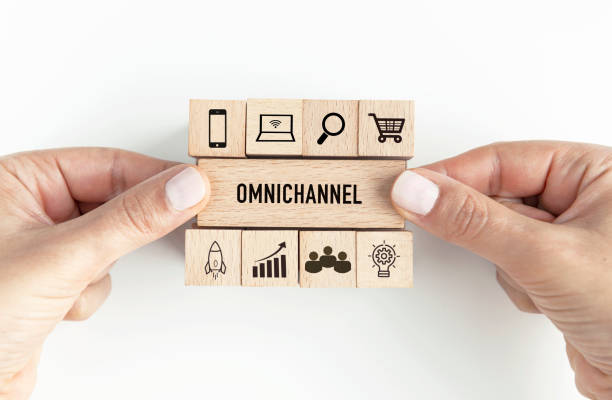
Modern car buyers use multiple online and offline touchpoints during their purchase journey, with online research comprising the majority of interactions. For automotive Business Development Centers (BDCs), this complex journey demands perfectly aligned messaging across every channel—ads, chat, calls, and in-store interactions. Without this consistency, dealerships risk customer confusion, abandoned leads, and diminished returns on marketing investments. Demand Local’s LinkOne Data platform solves this challenge by unifying first-party data across channels, ensuring your BDC scripts match exactly what prospects see in your advertising.
Key Takeaways
- Modern car buyers use multiple touchpoints during their purchase journey, requiring seamless messaging across all channels to prevent customer confusion and lead abandonment
- Companies that contact potential customers within an hour are about 7x as likely to qualify the lead as those that wait longer, making speed-to-lead critical for BDC success
- Omnichannel shoppers spent 4% more in-store and 10% more online, and showed higher repeat visitation compared to single-channel shoppers.
- In one client case, a 43% reduction in cost-per-lead was achieved when BDC scripts aligned with dynamic inventory ads
- 79% of customers expect consistent interactions across departments, and 83% expect to interact across channels seamlessly
- Effective omnichannel BDC strategies require integration across message consistency, data integration, response protocols, and lead handoff processes
- First-party data enables BDC teams to personalize every touchpoint based on ownership history, service records, and browsing behavior, creating relevant conversations rather than generic pitches
What Is an Omnichannel Marketing Strategy for Automotive BDCs?
An omnichannel marketing strategy for automotive BDCs ensures consistent messaging, pricing, and brand experience across every customer touchpoint—from initial ad exposure through chat, phone conversations, and final in-store interactions. Unlike multichannel approaches that simply offer multiple disconnected options, true omnichannel integration creates a unified customer journey where information flows seamlessly between systems and team members.
The modern BDC has evolved beyond a simple call center into a strategic command center that leverages data, technology, and personalized communication to drive dealership growth. With a large majority of buyers using online sources during their shopping journey, the BDC serves as the critical bridge between digital research and physical dealership visits.
Core Components of BDC Omnichannel Alignment
Effective omnichannel BDC strategies require integration across four key areas:
- Message Consistency: Ensuring value propositions, promotions, and pricing remain identical across all channels
- Data Integration: Connecting CRM, DMS, inventory feeds, and ad platforms to provide complete customer context
- Response Protocols: Standardizing response times and follow-up procedures regardless of lead source
- Lead Handoff: Creating clear processes for transferring qualified leads from BDC to sales floor with complete context
Why Customer Experience Consistency Across Channels Drives Higher Conversion Rates
Consistency in customer experience isn’t just about brand perception—it directly impacts your bottom line. Research shows that companies with strong omnichannel customer engagement witness higher year-over-year increases in annual revenue compared to those with weaker strategies. This dramatic difference stems from how consistency reduces friction in the buyer journey.
When customers receive conflicting information across channels—different pricing in ads versus phone conversations, or promises made in chat that sales teams don’t honor—it creates cognitive dissonance that often leads to abandoned purchases. 79% of customers expect consistent interactions across departments, and 83% expect to interact across channels seamlessly.
The Cost of Disconnected Touchpoints
Disconnected BDC operations create specific failure points that damage conversion rates:
- Lead abandonment: Speed-to-lead matters—companies that contact customers within an hour are nearly 7x as likely to qualify the lead, with failure to respond quickly often resulting in losing the lead to competitors
- First-response disadvantage: Faster response significantly increases qualification odds, meaning delayed responses may cause leads to shop elsewhere
- Appointment no-shows: When BDC promises don’t match sales floor reality, customers lose trust and cancel appointments
- Price confusion: Inconsistent pricing across channels signals unreliability and drives customers to competitors
Mapping BDC Scripts to Paid Ad Messaging and Landing Page Copy
The most critical alignment occurs between your paid advertising and initial BDC outreach. When prospects click on an ad promising a specific vehicle at a certain price, then receive a generic greeting that doesn’t acknowledge this context, trust immediately erodes. This “scent trail” must remain unbroken from ad click through phone conversation.
Effective BDC scripts extract key phrases, offers, and vehicle specifics directly from ad copy to create immediate relevance. For example, if your Google Vehicle Ads promote a 2024 Ford F-150 XLT (example price: $39,995 / 2.5% APR), your BDC greeting should acknowledge this offer: “Hi, I saw you were interested in our 2024 F-150 XLT at that example price and rate. I can confirm availability and details for you.”
Demand Local’s dynamic inventory ads solve this challenge by automatically syncing real-time inventory and pricing into ads, so BDC reps always reference the exact vehicle, price, and availability prospects saw in the original ad. This eliminates the common frustration of prospects being told vehicles are sold or priced differently than advertised.
Building Chat-to-Call Transition Scripts That Preserve Context
One of the most common failure points in automotive sales occurs when prospects move from chat to phone conversations. BDC representatives often ask customers to repeat information already shared in chat, creating frustration and signaling poor internal communication.
Effective chat-to-call transition scripts acknowledge the prior conversation and build upon it. This requires capturing key information during chat interactions:
- Vehicle interests: Specific models, trims, and features discussed
- Timeline: When the customer plans to purchase
- Budget parameters: Price range and financing preferences
- Objections raised: Concerns that need addressing in the phone conversation
- Appointment readiness: Whether they’re ready to schedule a visit
Script templates for acknowledging chat history might include: “I see you were chatting with Sarah about the 2024 Toyota RAV4 Hybrid. You mentioned you’re looking to purchase within the next two weeks and wanted to confirm the $2,000 loyalty discount applies to your trade-in. Let me verify all those details for you.”
Demand Local’s LinkOne Data Platform ingests CRM notes and web activity so agents see which vehicles a prospect browsed and what was discussed in chat, enabling true continuity from digital to voice interactions with proper opt-in and data permissions.
Aligning Phone Scripts with CTV, Display, and DOOH Campaign Creative
While inventory ads drive direct response, upper-funnel campaigns like Connected TV (CTV), display, and Digital Out-of-Home (DOOH) build brand awareness and consideration. When prospects influenced by these campaigns call your dealership, BDC scripts should acknowledge and reinforce the creative themes they’ve been exposed to.
For example, if your CTV campaign uses a specific tagline like “Your Adventure Starts Here,” BDC representatives should incorporate this phrase: “Thanks for calling Adventure Ford! I see you’ve been learning about our adventure-ready SUV lineup. Your adventure really can start here—let me tell you about our current offers.”
This approach leverages brand recall to create immediate familiarity and trust, making alignment particularly valuable for high-consideration purchases.
Demand Local’s CTV & OTT solutions feature VIN-level offers in creative while targeting audience segments appropriate for Connected TV, giving BDC teams specific creative themes and offers to reference when prospects call in. Digital Out-of-Home uses geo-fenced programmatic boards tied to first-party data, supporting probabilistic exposure and footfall analysis (with known limitations); reps can reference likely local promotions.
In-Store Script Alignment: Preparing Sales Teams for Omnichannel-Warmed Leads
The final—and often most neglected—handoff occurs when BDC-qualified leads arrive on your showroom floor. Sales teams frequently lack visibility into the digital breadcrumbs that led to the appointment, forcing customers to repeat their journey and creating frustration.
Effective in-store script alignment requires creating a “digital dossier” for each appointment that includes:
- Ad exposure history: Which campaigns influenced the customer
- VDP views: Specific vehicles researched online
- Chat transcripts: Previous conversations and concerns raised
- Phone conversation notes: Key details discussed and promises made
- Appointment context: What the customer expects to accomplish during their visit
Floor script templates should reference these prior touchpoints: “Hi Mr. Johnson, I see you’ve been researching our electric vehicle lineup online and spoke with Jessica about the Model Y’s range capabilities. You mentioned you’re particularly interested in the long-range version for your daily commute. I have that exact model ready for your test drive.”
Demand Local’s LinkOne Data Platform provides sales teams with a complete view of ad impressions, VDP views, and chat transcripts before the customer arrives on the lot, ensuring seamless continuity from digital research to in-person experience.
Leveraging First-Party Data to Personalize Every BDC Touchpoint
Generic scripts fail to capitalize on the rich first-party data available to modern dealerships. CRM and DMS systems contain valuable insights about customer ownership history, service records, trade-in equity, and previous purchases that can inform highly personalized BDC conversations.
For example, when calling a customer who recently serviced their 2018 Honda CR-V, a personalized script might reference their service history: “Hi Ms. Garcia, I noticed your 2018 CR-V just had its 60,000-mile service with us last month. With your current mileage, you might be approaching the point where upgrading to a newer model with the latest safety features makes sense. We have several CR-V trims in stock that would be perfect replacements.”
This approach leverages behavioral triggers to create relevant, timely conversations rather than generic sales pitches. Demand Local’s LinkOne Data Platform ingests CRM, DMS, and inventory feeds with proper opt-in and permissioning to enable real-time audience matching and personalized script prompts based on ownership and browsing data, without requiring manual research by BDC reps.
Measuring Omnichannel BDC Performance: Metrics That Matter
Effective omnichannel BDC strategies require measurement beyond basic call volume or lead count. The right metrics connect marketing spend directly to revenue outcomes and identify which script variations and channels drive actual sales.
Key performance indicators include:
- Sales match-back: Connecting specific ad exposures and BDC conversations to actual vehicle purchases
- Cost-per-lead by channel: Comparing efficiency across different marketing channels
- VDP views to appointments: Measuring how effectively digital engagement converts to showroom visits
- Call-to-show ratio: Tracking how many phone conversations result in actual appointments
- Multi-touch attribution: Understanding how different channels work together in the customer journey
Demand Local’s proprietary attribution provides multi-touch attribution and purchase match-back where data and permissions allow, so dealers can measure which script variations and channels drive actual sales rather than just vanity metrics like clicks or impressions.
Common Pitfalls in Omnichannel BDC Script Implementation
Despite the clear benefits, many dealerships struggle with omnichannel BDC implementation due to specific operational and technological barriers.
Key Implementation Challenges
- Inventory sync failures: Ads promoting vehicles that are sold or mispriced by the time BDC calls
- Channel silos: Different teams managing different channels without coordination
- Training gaps: BDC staff not understanding how to reference campaign assets
- Tech stack fragmentation: Disconnected systems that don’t share customer data
- Script rigidity: Over-scripting that sounds robotic and damages relationships
Demand Local’s Inventory Marketing solution eliminates the risk of BDC reps referencing sold or mispriced vehicles by providing dynamic VIN-level ads with real-time updates that automatically sync with your inventory feed.
Training BDC Teams for Omnichannel Fluency
Technology alone cannot create effective omnichannel BDC operations—proper training and enablement are essential. BDC representatives need to understand how to reference campaign assets, navigate CRM systems, and maintain consistent messaging across channels while preserving authenticity.
Effective training programs include:
- Role-play scenarios: Practicing transitions between channels and referencing campaign assets
- Campaign calendar awareness: Understanding current promotions and messaging themes
- Platform familiarization: Training on CRM, DMS, and marketing platforms
- Objection handling: Preparing responses for common concerns raised across channels
- Empathy mapping: Understanding customer perspectives throughout the journey
Weekly campaign briefings help BDC staff stay current with messaging themes and offers, while ongoing coaching ensures scripts are delivered naturally rather than robotically.
Real-World Examples: Dealers Who Unified BDC Scripts Across Channels
The proof of omnichannel BDC alignment lies in measurable results. Demand Local clients have achieved significant improvements by unifying their messaging across channels.
Case Study Results
- 43% reduction in cost-per-lead after integrating Vehicle Listing Ads with SEM and feeding real-time inventory into BDC scripts
- 12 aged EV units sold within weeks via unified dynamic display, CTV, and BDC follow-up with consistent urgency messaging
- Rapid launch within days thanks to pre-built inventory and CRM integrations
These results demonstrate that omnichannel BDC alignment isn’t just theoretical—it delivers concrete, measurable improvements in efficiency and revenue. The 43% CPL reduction was achieved specifically by synchronizing Facebook and Google Vehicle Ads with SEM and ensuring BDC scripts referenced the exact inventory and pricing prospects saw in ads.
FAQs on Omnichannel BDC Scripts
Q: How do I extract key phrases from paid ads to use in BDC scripts?
A: Start by creating a shared document that lists all active campaigns with their key messaging elements: specific vehicles, pricing, offers, and value propositions. Train BDC staff to check this document before calling leads from specific campaigns. For dynamic inventory ads, ensure your BDC platform automatically displays the exact vehicle and price the prospect saw, eliminating manual extraction needs.
Q: What CRM fields should BDC reps review before every call?
A: Essential CRM fields include previous purchase history, service records, current vehicle details, recent website activity (especially VDP views), chat transcripts, and any previous communications. Integration with platforms like Eleads, VinSolutions, CDK, and DealerVault ensures this data flows automatically into your BDC workflow without manual entry.
Q: How quickly can we implement omnichannel BDC script alignment?
A: Some dealerships can launch an initial pilot within a week, beginning with inventory ads on Google and Meta, then layering CTV and DOOH as ROI is proven. The key is starting with a data audit and API connection to your CRM/DMS and inventory feed, which Demand Local can complete rapidly.
Q: What metrics prove that aligned scripts improve conversion rates?
A: Track sales match-back rates connecting specific ad exposures to actual purchases, cost-per-lead by channel, VDP views to appointment ratios, and call-to-show rates. Demand Local’s proprietary attribution provides ad influence insights and purchase tracking that directly tie script alignment to revenue outcomes.
Q: How do we prevent inventory sync errors between ads and phone scripts?
A: Implement automated inventory feeds that sync nightly (or more frequently) between your DMS and advertising platforms. Demand Local’s Inventory Marketing solution automatically pulls the right VIN, price, and imagery into live ads, ensuring BDC reps always reference accurate, current inventory information.
Q: What training is required for BDC teams to execute omnichannel scripts effectively?
A: Effective training includes weekly campaign briefings to keep staff current with messaging themes, role-play scenarios practicing channel transitions, platform familiarization with CRM and marketing systems, and ongoing coaching to ensure scripts sound natural rather than robotic. Focus on teaching reps to use scripts as conversational roadmaps rather than rigid requirements.