
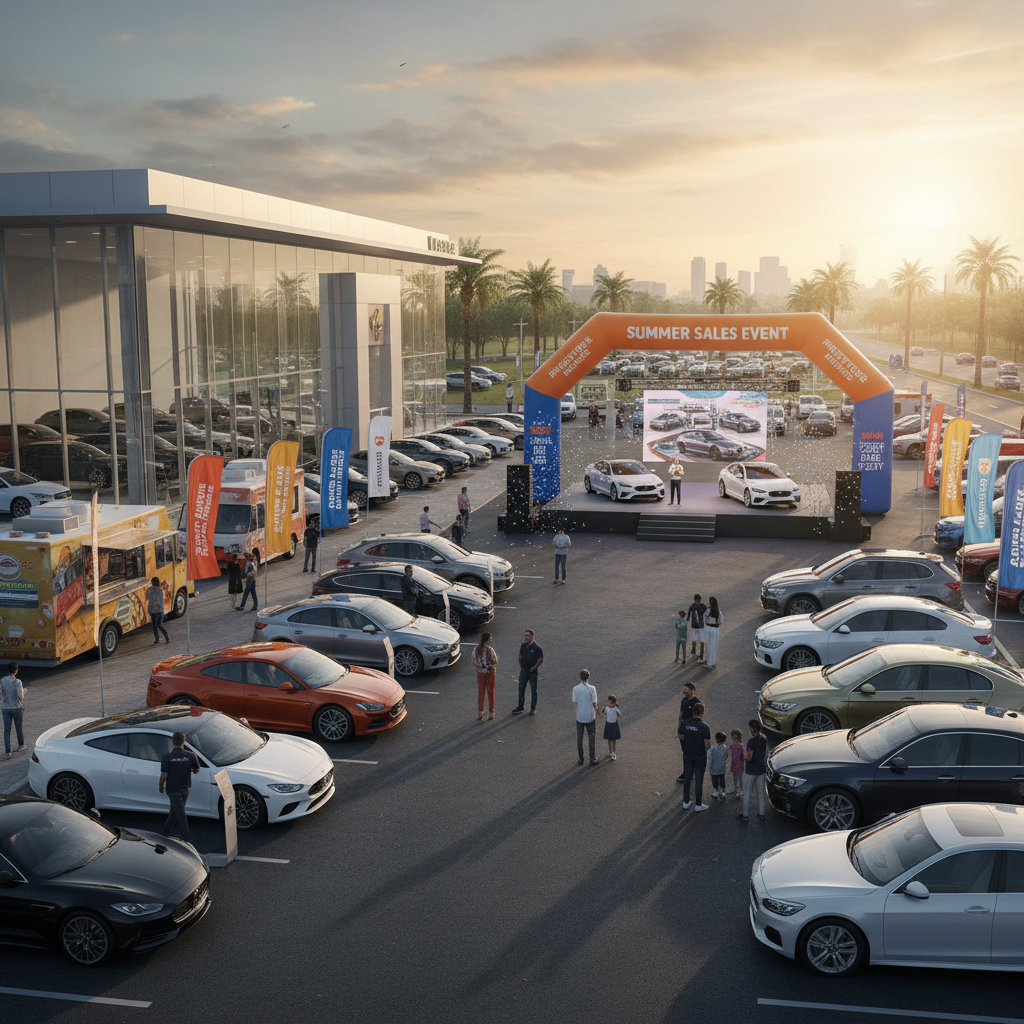
Time-sensitive automotive events—from model-year clearances to holiday sales weekends—demand marketing that’s as agile and impactful as the promotions themselves. Traditional channels often move too slowly, but Connected TV (CTV) advertising delivers the perfect blend of broad reach, surgical precision, and real-time adaptability. For dealerships looking to drive immediate foot traffic and clear inventory, Demand Local’s CTV provides a managed solution to launch VIN-level or audience-specific video campaigns through The Trade Desk, turning high-stakes promotional windows into measurable sales opportunities.
Key Takeaways
- CTV boasts exceptionally high completion rates, with 15-second ads achieving 94.5% and 30-second ads reaching 96%, ensuring your event message is seen in full
- CTV campaigns can be launched and optimized in near real-time, a critical advantage for short-duration events, with dynamic ads that automatically update with live inventory
- Nearly 70% of U.S. households will watch CTV content by 2025, making it a primary channel to reach car buyers during promotional events
- 70% of automotive shoppers who saw a CTV ad took some action, such as visiting a dealership, demonstrating the channel’s power to drive immediate foot traffic
- Integrating CTV with search, social, and programmatic DOOH creates a multi-touchpoint journey that lifts purchase intent by 15% compared to digital alone
- First-party CRM and DMS data can be securely leveraged through platforms to build hyper-relevant audiences for your event, ensuring your promotional message reaches the most qualified shoppers
What Is CTV and Why It Matters for Automotive Marketing
Connected TV (CTV) refers to any television that streams video content over the internet, whether it’s a smart TV or a device like Roku, Amazon Fire Stick, or a gaming console. CTV advertising allows marketers to place video ads within this streaming content, combining the immersive power of the big screen with the targeting and measurability of digital.
For automotive marketers, this is a game-changer. Unlike linear TV, which relies on broad demographic assumptions, CTV can deliver custom ad experiences to households based on actual behaviors, like recent visits to vehicle research sites or your own dealership’s website.
How Connected TV Differs from Linear Television
The key distinction lies in addressability and measurement. Linear TV buys reach a general audience watching a specific show or time slot. CTV, however, uses internet connectivity to serve ads to specific households identified through data. This means you can show an ad for your year-end clearance event to a household that was just researching SUVs, while showing a different ad for your new luxury sedan launch to a high-income household in your ZIP code.
Furthermore, CTV provides immediate, detailed performance data on impressions, completion rates, and even downstream actions like website visits or showroom visits, allowing for rapid campaign optimization.
Why Auto Marketers Are Shifting Budgets to CTV
The evidence is compelling. With nearly 70% of U.S. households watching CTV content by 2025, it’s where your audience is. For dealerships, this translates to direct action, with 70% of automotive shoppers taking a step like a website visit or a showroom tour after seeing a CTV ad.
The Strategic Advantage of CTV for Event-Based Automotive Promotions
Event-based promotions are defined by their urgency and finite window. Success hinges on quickly generating mass awareness and driving immediate action. CTV is uniquely positioned to deliver both.
Why Timing and Reach Define Event Success
An end-of-quarter push or a holiday weekend sale has a built-in expiration date. CTV’s programmatic nature allows campaigns to be launched in days, not weeks, and budgets can be front-loaded to maximize impact during the critical first 48-72 hours of an event. Its massive reach ensures your local market is saturated with your message, creating a sense of urgency and FOMO (fear of missing out).
CTV’s Role in Driving Dealership Foot Traffic
The ultimate goal of most automotive events is to get potential buyers on the lot. CTV excels at building this initial awareness and desire. Data analysis shows that 45.83%-79.11% of sales occur within just 5 miles of a dealership. CTV’s precise geo-targeting capabilities allow you to focus your budget exclusively on these high-propensity zones, ensuring your event message reaches the people most likely to visit your showroom.
How CTV Advertising Works: Platforms, Inventory, and Buying Models
Running a CTV campaign involves technology and channels that are distinct from both linear TV and traditional digital ads.
Programmatic vs Direct CTV Buys
Most CTV inventory is bought programmatically through a Demand-Side Platform (DSP), with The Trade Desk being a leading DSP widely used in automotive CTV campaigns. A DSP is a software platform that lets advertisers buy ad space across thousands of CTV apps (like ad-supported streaming services including Hulu and select inventory on platforms like Netflix and YouTube TV) in an automated, auction-based system. This is the most efficient and flexible way to buy, offering granular targeting and real-time optimization.
Direct buys, on the other hand, involve negotiating with a single streaming service for a fixed number of impressions. This is less common for local advertisers and offers less flexibility.
Understanding CPM Benchmarks in Automotive
CTV is typically priced on a CPM (cost per thousand impressions) basis. The key metric to watch is not just the CPM, but the downstream value it drives—like cost-per-lead (CPL) or cost-per-sale. Honda’s regional campaigns, for instance, achieved a documented 237% sales lift from CTV, while demonstrating strong cost efficiency in driving dealership website visits.
Building Event-Ready Audiences: First-Party Data and CTV Targeting
The most powerful CTV campaigns for automotive events are built on your own customer data.
How Dealership CRM Feeds CTV Campaigns
Your dealership’s CRM and Dealer Management System (DMS) are goldmines of first-party data. By securely integrating this data with a CTV platform, you can build highly targeted audience segments. For example:
- Past customers: Target service customers who are likely due for a new vehicle.
- In-market shoppers: Reach people who have recently viewed a specific vehicle on your site but didn’t convert.
- Look-alike audiences: Use your best customer profiles to find new households that share similar characteristics.
This data is securely matched to household IDs in the CTV ecosystem through a Customer Data Platform (CDP) like Demand Local’s LinkOne Data. The platform uses privacy-safe encryption to pipe this CRM and DMS data directly into The Trade Desk, enabling you to build custom and look-alike audiences that outperform generic targeting. This ensures your event messaging reaches an audience with a genuine, demonstrable interest in your offer, maximizing your promotional ROI.
Creative Best Practices for Automotive Event Promotions on CTV
In the world of CTV, your creative is your salesperson. For an event-based promotion, it must be clear, urgent, and compelling. Given that CTV ads boast 15-second ads achieving 94.5% and 30-second ads reaching 96% completion rates, you have a captive audience—use it wisely.
Key creative principles for event ads:
- Lead with the offer: In the first 3 seconds, state the core benefit of your event (e.g., “$5,000 OFF all 2024 SUVs!”).
- Show the inventory: Feature the specific vehicles on promotion. For maximum impact, use dynamic creative that pulls live inventory data.
- Create urgency: Use a countdown timer or clearly state the event dates (“This Weekend Only!”).
- Clear call to action: Tell the viewer exactly what to do next (“Visit our website,” “Call now,” “Stop by before Sunday!”).
- Design for sound off: Many viewers may have their TV on mute. Ensure your message is clear from the visuals and on-screen text alone.
Demand Local’s Inventory Marketing can generate these dynamic VIN-level ads, automatically updating the creative with real-time price and availability data to ensure your event promotion is always accurate.
Omnichannel Integration: Pairing CTV with Search, Social, and DOOH
A CTV ad is a powerful first touchpoint, but the modern car buyer’s journey is multi-faceted. The true power of an event-based promotion is unlocked when CTV is the anchor of an omnichannel strategy.
Here’s how a cohesive campaign works:
- Awareness (CTV): A CTV ad introduces your weekend event to a broad, targeted audience in your local market.
- Consideration (Search & Social): Viewers who saw the CTV ad are then retargeted on search (Google) when they look for your dealership or the promoted models. They are also served dynamic carousel ads on Facebook and Instagram showcasing the exact vehicles from the CTV spot.
- Reinforcement (DOOH): As they drive around town, they see your event messaging on programmatic DOOH billboards near your dealership or on their commute, reinforcing the message from their living room to the real world.
This sequential messaging creates a powerful narrative that guides the shopper from initial awareness to a showroom visit. Research shows that this integrated approach is highly effective, with a 15% lift in purchase intent when ads aired on TV + digital compared to digital alone.
Measuring CTV Performance: Attribution, Lift, and Sales Match-Back
One of the biggest advantages of CTV over traditional TV is its measurability. You don’t have to guess if your event campaign worked; you can prove it.
Key performance indicators (KPIs) for an event-based CTV campaign go far beyond simple clicks:
- Vehicle Detail Page (VDP) Views: Track if CTV viewers are visiting your website to learn more about the promoted vehicles.
- Cost-Per-Lead (CPL): Measure the true cost of generating a qualified lead during your event period.
- Sales Match-Back: The gold standard. By connecting your ad exposure data with your DMS, you can directly tie a CTV impression to a vehicle sale.
- Foot-Traffic Attribution: Use location data to see how many ad viewers subsequently visited your showroom.
Demand Local’s platform provides proprietary attribution reporting that delivers ad-influence insights, ROI, and purchase tracking, letting you move beyond vanity metrics and understand the direct revenue impact of your CTV event spend.
CTV Budget Planning and CPM Benchmarks for Auto Dealers
For a local dealership, CTV is a scalable and efficient investment. An effective local event campaign can often be run with a budget of $10,000–$20,000, which is a fraction of the cost of a traditional TV buy but with infinitely more precision.
It’s also crucial to explore your OEM’s co-op advertising program. Most automotive manufacturers offer co-op funds that can significantly offset CTV campaign costs. A well-structured CTV campaign that meets your manufacturer’s creative and targeting guidelines can be a powerful way to leverage these funds for a high-impact, measurable local event.
Case Study: Clearing 12 Aged EVs in 3 Weeks with CTV + Dynamic Display
A real-world example demonstrates the power of this approach. A dealership was struggling to move 12 aged electric vehicle units that were rapidly depreciating on their lot. They partnered with Demand Local to launch a targeted CTV campaign.
The strategy was simple: use CTV to create broad awareness and urgency around an “EV Clearance Event,” while simultaneously running dynamic display ads that featured the specific VINs of the 12 units. The CTV creative highlighted the limited inventory and special financing, while the display ads provided the real-time details.
The result was remarkable: all 12 aged EVs were sold within weeks. This success was driven by the combination of CTV’s high-impact, broad reach and the precision of dynamic, inventory-synced display ads, proving that an integrated, data-driven approach can solve even the most stubborn inventory challenges.
Common Pitfalls and How to Avoid Them in CTV Event Campaigns
Even powerful channels can be misused. Here are common mistakes in event-based CTV and how to avoid them:
- Out-of-Stock Ads: Promoting a vehicle that’s just sold is a waste of budget and frustrates customers.
- Solution: Ensure your creative is tied to a real-time inventory feed, like Demand Local’s LinkOne Data, which performs nightly inventory syncs to minimize the risk of promoting out-of-stock vehicles.
- Poor Landing Page Experience: Driving traffic from a high-quality CTV ad to a generic, slow-loading homepage will kill your conversion rate.
- Solution: Create a dedicated, fast-loading event landing page that mirrors the CTV offer.
- Creative Fatigue: Running the same ad for the entire event can lead to banner blindness.
- Solution: Plan for multiple creative variants and rotate them throughout your campaign flight.
- Ignoring Mobile: Many viewers will pick up their phone to research a vehicle right after seeing a CTV ad.
- Solution: Ensure your site is mobile-optimized and that your search and social retargeting campaigns are ready to capture this immediate interest.
How Demand Local Simplifies CTV for Your Next Event
Running a successful, compliant, and measurable CTV event campaign requires a blend of technology, automotive expertise, and media buying prowess. This is where Demand Local proves its worth. As a data-first agency built specifically for the automotive industry, Demand Local removes the complexity so you can focus on your sales event.
Their CTV & OTT service delivers VIN-level or audience-level video via The Trade Desk, built for brand lift and conquesting during your high-stakes promotional windows. But their true differentiator is the integration with their proprietary LinkOne Data platform. This platform seamlessly ingests your CRM and DMS data, allowing Demand Local to build custom, hyper-relevant audiences for your CTV campaign that generic vendors simply can’t match.
Furthermore, their Inventory Marketing solution ensures your CTV creative can be dynamically updated with live inventory, preventing wasted spend on out-of-stock vehicles. Their omnichannel approach ties your CTV push to search, social, and programmatic DOOH, creating a unified customer journey. With no startup fees and a team that understands the unique pressures of a dealership sales event, Demand Local provides a complete, end-to-end solution that’s designed to deliver real-world results, not just impressions.
FAQs on Leveraging CTV for Event-Based Promotions in Automotive
Q: What is the difference between CTV and OTT in automotive advertising?
A: CTV (Connected TV) refers to the physical device—the smart TV or streaming stick—that connects to the internet. OTT (Over-the-Top) refers to the method of content delivery—the streaming service like Hulu or Netflix that bypasses traditional cable. In advertising, the terms are often used interchangeably, but CTV specifically describes ads delivered to a TV screen via an internet-connected device, which is the primary focus for automotive event promotions due to its large-screen, high-impact nature.
Q: How much does a CTV campaign cost for a car dealership event?
A: CTV campaigns are typically priced on a CPM (cost per thousand impressions) basis. A meaningful local event campaign can be launched with a budget as low as $10,000, which can be significantly offset by leveraging available OEM co-op advertising funds. Demand Local operates on a CPM-based model with no startup fees, allowing for flexible budgeting aligned to your specific event goals.
Q: Can I target specific ZIP codes or DMAs with CTV ads?
A: Yes, absolutely. Geographic targeting is a core strength of CTV advertising. You can target your ads down to the ZIP code, DMA (Designated Market Area), or even a custom radius around your dealership. This is crucial for local event promotions, ensuring your budget is spent only on reaching potential customers in your immediate market.
Q: How do I measure whether my CTV event campaign drove showroom visits?
A: This is measured through foot-traffic attribution. By using anonymized location data from mobile devices, CTV platforms can track if a household that was exposed to your ad subsequently visited your dealership’s physical location. Demand Local enhances this with proprietary attribution reporting that can provide sales match-back data, directly connecting an ad impression to a vehicle sale in your DMS, offering the most concrete proof of ROI.
Q: What video length performs best for automotive event promotions on CTV?
A: Both 15-second and 30-second formats are effective, but they serve different purposes. A 15-second ad is ideal for a single, clear message (e.g., “$3,000 Event This Weekend!”) and boasts a 94.5% completion rate. A 30-second ad allows for more storytelling and showcasing multiple vehicles or offers, with a 96% completion rate. For a fast-paced event, a 15-second spot is often the most efficient choice.