

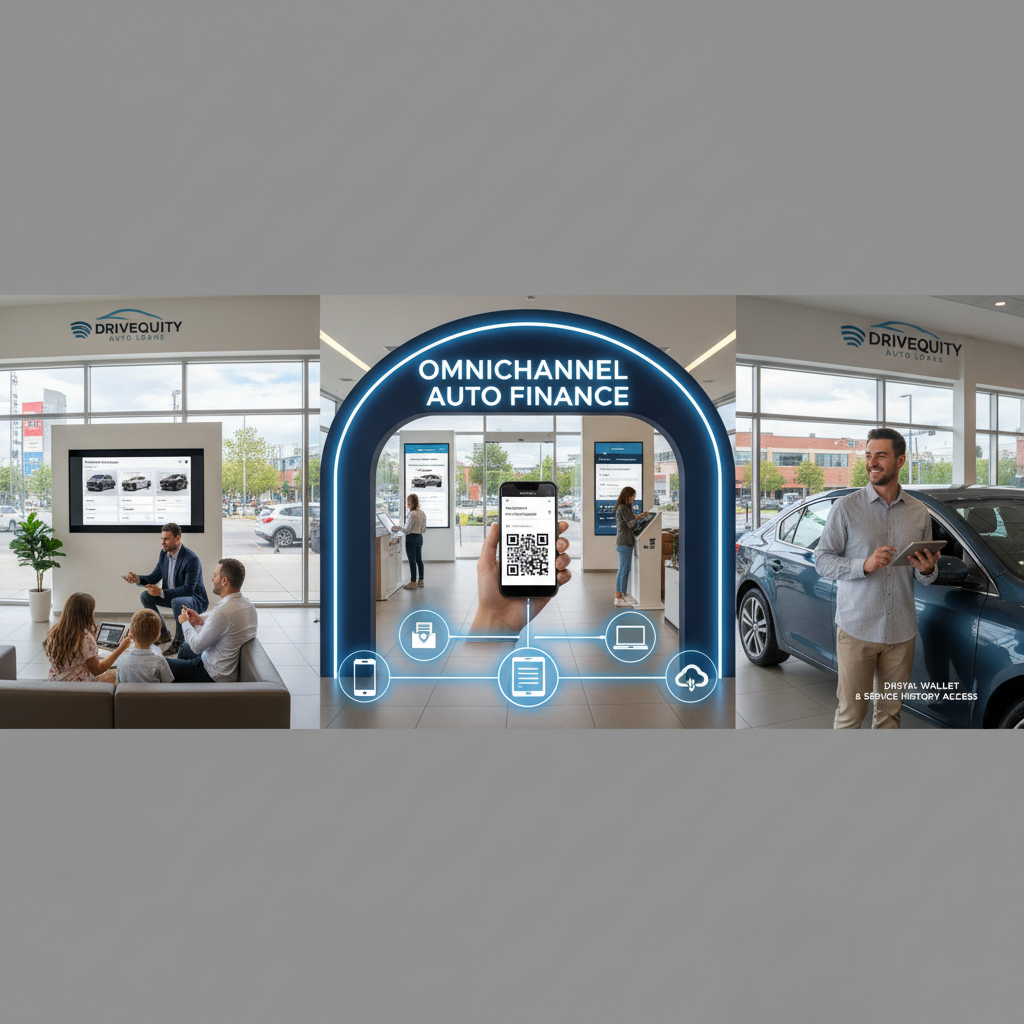
Financial services marketing in 2025 demands more than just digital presence—it requires seamless orchestration across every customer touchpoint. Research shows that around 62% of bank clients want smooth transitions between channels, yet only 13% believe their institution truly meets their omnichannel expectations—revealing a gap between promise and delivery that has never been wider. For banks, credit unions, and financial service providers, building a cohesive omnichannel strategy isn’t optional—it’s essential for survival in an increasingly competitive landscape where 69% of Americans would consider switching banks if their primary institution couldn’t connect to their preferred financial apps and accounts. Through Demand Local’s LinkOne Data Platform, financial institutions can unify first-party data to power personalized campaigns across search, social, CTV, and display while maintaining strict compliance standards.
Key Takeaways
- Financial institutions implementing effective omnichannel strategies achieve 20% higher customer satisfaction and 30% better customer retention compared to single-channel operations
- While 91% of financial institutions expect fully integrated channels by 2025, only 51% currently have fully integrated communication channels, revealing a significant implementation gap
- Omnichannel differs from multichannel by providing unified customer context—81% of consumers have negative reactions when forced to repeat information across channels
- First-party data unification through secure APIs and encryption forms the foundation of compliant financial services marketing
- Programmatic DOOH and CTV advertising drive brand awareness while search and social capture high-intent prospects
- Proper attribution tracking connects marketing spend to actual loan originations and account openings through sales match-back capabilities
What Is Omnichannel Strategy in Financial Services?
An omnichannel strategy in financial services represents a fundamental shift from product-centric to customer-centric thinking. Unlike traditional marketing approaches that treat each channel as independent, omnichannel banking integrates mobile apps, websites, branches, call centers, and digital advertising into a cohesive ecosystem where customer data flows seamlessly across all touchpoints.
This integration enables customers to start a loan application on their mobile device during lunch, receive a personalized follow-up via email, complete the process on their desktop at home, and visit a branch for final consultation—all without repeating information or experiencing friction. The result is a banking experience that feels intuitive, responsive, and tailored to individual needs.
Core Components of Financial Services Omnichannel
Successful omnichannel strategies in financial services share several critical components:
- Unified Customer View: Complete 360-degree profiles accessible across all channels
- Real-time Data Synchronization: Immediate updates reflecting customer interactions regardless of entry point
- Consistent Messaging: Brand voice and value propositions maintained across digital and physical touchpoints
- Seamless Handoffs: Smooth transitions between self-service and human-assisted interactions
- Personalized Content: Contextually relevant offers based on customer behavior and life stage
- Compliance Integration: Regulatory requirements baked into every customer interaction
Unlike multichannel approaches where branches, websites, and mobile apps operate in silos, omnichannel banking recognizes that customers don’t think in channels—they think in tasks and outcomes. The technology infrastructure must support this reality by providing consistent, context-aware experiences regardless of how customers choose to interact.
Omnichannel vs Multichannel: Why the Distinction Matters for Financial Institutions
The difference between omnichannel and multichannel isn’t merely semantic—it represents fundamentally different approaches to customer experience with significant business implications.
Multichannel: Independent Touchpoints
Multichannel banking offers customers multiple ways to interact—branches, ATMs, websites, mobile apps, call centers—but each channel operates independently with its own data systems and processes. This creates friction points where customers must:
- Repeat personal information when switching channels
- Re-explain their situation to different representatives
- Navigate inconsistent messaging and offers
- Experience delays as information transfers between systems
This siloed approach leads to 81% of consumers having negative reactions when forced to repeat information, directly impacting satisfaction and retention.
Omnichannel: Connected Customer Experience
Omnichannel banking eliminates these friction points through integrated data systems that provide complete customer context regardless of entry point. When a customer calls the call center after browsing loan options online, the representative sees their browsing history, previous interactions, and current application status. This enables:
- Personalized service without information repetition
- Consistent messaging across all touchpoints
- Proactive problem resolution based on behavioral patterns
- Seamless transaction completion across devices and channels
For financial institutions, this distinction matters because omnichannel customers demonstrate 30% higher lifetime value and significantly better retention rates. The integrated approach also reduces operational costs by eliminating redundant data entry and improving first-contact resolution rates.
Why Financial Services Companies Need an Omnichannel Marketing Strategy
The business case for omnichannel in financial services extends beyond customer satisfaction to measurable financial outcomes that directly impact competitive positioning.
Increasing Customer Lifetime Value Across Products
Financial institutions with mature omnichannel capabilities achieve significantly higher customer lifetime value through:
- Cross-sell Success: Complete customer profiles reveal opportunities for relevant product recommendations
- Retention Improvement: 30% better customer retention reduces churn costs and preserves revenue
- Product Adoption: Seamless experiences encourage customers to try additional services
- Referral Generation: Satisfied customers become brand advocates through word-of-mouth
The financial impact is substantial—omnichannel customers have roughly 30% higher lifetime value than single-channel customers, according to research associated with Boston Consulting Group.
Meeting Expectations in the Digital Banking Era
Modern banking customers use between 3-5 financial applications to manage their finances, with 59% expecting on-demand, “anywhere-anytime” banking service. This expectation extends beyond basic transactions to include:
- Real-time account updates and alerts
- Personalized financial insights and recommendations
- Seamless application processes across devices
- Immediate access to customer support through preferred channels
Financial institutions that fail to meet these expectations risk customer defection, with 69% of Americans stating they would consider switching banks if their primary institution couldn’t connect to preferred applications.
Understanding the Financial Services Customer Journey Across Channels
Mapping the financial services customer journey requires understanding how customers move between digital and physical touchpoints throughout their relationship lifecycle.
Mapping Digital and Physical Touchpoints
The typical financial services customer journey includes multiple touchpoints across different stages:
Awareness Stage:
- CTV and display advertising
- Social media content
- Search engine results
- Branch signage and location
Consideration Stage:
- Website research and comparison tools
- Mobile app exploration
- Email nurturing campaigns
- Branch consultations
- Call center inquiries
Application Stage:
- Online application forms
- Mobile app submissions
- In-branch applications
- Phone-based applications
Onboarding and Servicing:
- Welcome emails and communications
- Mobile app notifications
- Branch follow-ups
- Call center support
- Direct mail communications
Identifying High-Intent Moments in Banking and Lending
Successful omnichannel strategies focus on high-intent moments where customers are most receptive to financial services:
- Life Events: Marriage, home purchase, new job, retirement planning
- Seasonal Opportunities: Tax season, back-to-school, year-end financial planning
- Behavioral Triggers: Account balance thresholds, credit score changes, loan payment milestones
- Competitive Moments: Expiring promotional rates, competitor offers, service complaints
By identifying these high-intent moments and orchestrating consistent messaging across channels, financial institutions can capture opportunities that might otherwise be missed in siloed marketing approaches.
Step 1: Unify First-Party Data to Power Your Omnichannel Strategy
Data unification forms the foundation of any successful omnichannel strategy in financial services. Without integrated customer data, personalized marketing becomes impossible, and compliance requirements become exponentially more complex.
Connecting CRM, Core Banking, and Marketing Platforms
Effective data unification requires connecting multiple systems through secure APIs:
- CRM Systems: Customer relationship management data including interaction history and preferences
- Core Banking Platforms: Transaction data, account information, and product holdings
- Marketing Platforms: Campaign data, engagement metrics, and attribution information
- Compliance Systems: Consent management, regulatory documentation, and audit trails
This integration creates a single source of truth that enables consistent customer experiences while maintaining regulatory compliance. Demand Local’s LinkOne Data Platform specializes in this integration, piping CRM and DMS data directly into Meta, Google, and The Trade Desk with privacy-safe encryption.
Privacy-Safe Data Activation in Regulated Industries
Financial services face unique privacy and compliance challenges that require specialized approaches to data activation:
- Consent Management: Explicit opt-in tracking across all channels and touchpoints
- Data Minimization: Collecting only necessary information for specific purposes
- Encryption: Advanced encryption protecting data at rest and in transit
- Audit Trails: Complete documentation of data access and usage for regulatory compliance
- Right to Erasure: Systems that can delete customer data across all integrated platforms
These requirements make secure, compliant data activation essential rather than optional. Financial institutions must balance personalization with privacy protection to maintain customer trust while delivering relevant experiences.
Step 2: Select and Integrate the Right Channels for Financial Services
Channel selection for financial services omnichannel strategies should align with customer preferences, regulatory requirements, and business objectives.
Paid Search and Social for Acquisition
Search and social advertising serve as primary acquisition channels for financial services:
- Search Engine Marketing: Captures high-intent prospects actively researching financial products
- Social Media Advertising: Builds brand awareness and targets specific demographics and life stages
- Google Vehicle Ads: For auto loan and financing products, these specialized ad formats drive qualified traffic
- Facebook Dynamic Ads: Retarget website visitors with personalized product recommendations
These channels work best when integrated with first-party data to ensure targeting accuracy and compliance with financial advertising regulations.
CTV and Display for Brand Awareness
Upper-funnel brand building requires different channel strategies:
- CTV & OTT Advertising: Delivers audience-level video via The Trade Desk to drive brand lift and conquest campaigns
- Programmatic Display: Targets specific demographics and behavioral segments across premium publisher networks
- Digital Out-of-Home: Geo-fenced, programmatic boards tied to first-party data enable event-based promotions
These channels build brand recognition and consideration among prospects who may not yet be actively searching for financial services.
In-App and Email for Servicing and Retention
Existing customer engagement leverages owned channels:
- Mobile App Notifications: Real-time alerts and personalized recommendations
- Email Marketing: Nurture campaigns, account updates, and cross-sell opportunities
- SMS Messaging: Time-sensitive notifications and verification requests
- Direct Mail: High-value offers and relationship-building communications
These channels maintain customer relationships and drive product adoption among existing customers, contributing significantly to lifetime value.
Step 3: Orchestrate Messaging and Creative Across Touchpoints
Message orchestration ensures consistent, compliant communication across all customer touchpoints while maintaining brand integrity and regulatory compliance.
Building Message Hierarchies by Product and Persona
Effective message orchestration requires structured hierarchies that account for:
- Product Complexity: Simple products (checking accounts) vs. complex products (mortgages, investments)
- Customer Sophistication: New customers vs. experienced financial services users
- Regulatory Requirements: Mandatory disclosures, APR presentations, and compliance language
- Channel Capabilities: Message length, visual requirements, and interaction patterns
This structured approach ensures that customers receive appropriate information at the right time through their preferred channels.
Ensuring Compliance in Every Creative Execution
Financial services advertising carries significant compliance requirements that must be integrated into every creative execution:
- Equal Housing Lender: Required for mortgage and home equity products
- FDIC Insurance Disclosures: Mandatory for deposit products
- APR Presentations: Specific formatting and prominence requirements
- Risk Disclosures: Clear communication of potential risks and limitations
- State-Specific Requirements: Varying requirements across different jurisdictions
Creative templates and approval workflows help ensure compliance while maintaining marketing agility. Automated disclaimer management systems can dynamically insert required language based on product type, geography, and channel.
Step 4: Activate Real-Time Personalization and Retargeting
Real-time personalization transforms generic marketing into relevant, timely customer experiences that drive engagement and conversion.
Retargeting Loan Applicants Who Didn’t Complete
Abandoned loan applications represent significant lost revenue opportunities. Effective retargeting strategies include:
- Email Follow-ups: Remind applicants of incomplete applications with pre-filled information
- Display Advertising: Show relevant loan products to website visitors who viewed application pages
- Social Media Retargeting: Engage prospects who interacted with loan content but didn’t convert
- SMS Notifications: Time-sensitive reminders for time-limited offers
These retargeting efforts can recover a meaningful share of abandoned applications—often recapturing a significant portion of interested borrowers—when executed properly across coordinated channels.
Using Look-Alike Modeling to Find High-Value Prospects
Look-alike modeling extends successful customer profiles to find new prospects with similar characteristics:
- CRM-Based Look-alikes: Models built from existing customer data to find similar prospects
- Behavioral Look-alikes: Models based on high-value customer behaviors and interactions
- Geographic Look-alikes: Models targeting areas with demographics similar to successful customer clusters
- Life-Stage Look-alikes: Models identifying prospects in similar life situations to current customers
Demand Local’s LinkOne Data Platform enables financial institutions to build and deploy these look-alike audiences across Meta, Google, and Amazon, scaling successful acquisition strategies while maintaining compliance.
Step 5: Measure Attribution and ROI Across the Omnichannel Funnel
Attribution measurement connects marketing spend to actual business outcomes, providing the data necessary to optimize omnichannel strategies.
Tracking Loan Originations Back to Campaign Touchpoints
Effective attribution in financial services requires tracking complex customer journeys that may span weeks or months:
- Multi-touch Attribution: Assigns credit to multiple touchpoints in the customer journey
- Sales Match-back: Connects closed loans and account openings to specific marketing campaigns
- Cost Per Acquisition: Measures actual cost to acquire new customers by product and channel
- Customer Lifetime Value: Tracks long-term revenue generated by marketing-acquired customers
This attribution capability enables financial institutions to optimize marketing spend based on actual business outcomes rather than vanity metrics like clicks or impressions.
Building Dashboards That Connect Spend to Revenue
Effective dashboard reporting includes:
- Channel Performance: ROI by channel, campaign, and creative
- Product Performance: Conversion rates and revenue by financial product
- Customer Segment Performance: Results by demographic, behavioral, and life-stage segments
- Compliance Metrics: Adherence to regulatory requirements and approval workflows
Demand Local’s proprietary attribution reporting delivers ad influence insights, ROI, and purchase tracking specifically designed for financial services brands, connecting digital marketing efforts to actual loan originations and account openings.
Common Pitfalls When Building an Omnichannel Strategy in Financial Services
Despite the clear benefits, many financial institutions struggle with omnichannel implementation due to common pitfalls.
Avoiding Siloed Campaign Management
Siloed campaign management occurs when different teams manage different channels independently, leading to:
- Inconsistent messaging and offers
- Duplicate or conflicting communications
- Missed opportunities for cross-channel optimization
- Inefficient budget allocation
Solution: Centralized campaign management with cross-functional teams and integrated technology platforms.
Balancing Personalization with Privacy and Compliance
Over-personalization can create compliance risks and privacy concerns:
- Collecting excessive customer data without clear purpose
- Making assumptions about customer circumstances
- Failing to maintain proper consent documentation
- Violating regulatory requirements for financial advertising
Solution: Privacy-by-design approaches that balance personalization with compliance requirements and customer comfort levels.
Real-World Examples: Omnichannel Strategies That Deliver Results
Real-world implementations demonstrate the tangible benefits of effective omnichannel strategies in financial services.
Credit Union HELOC Push: 90-Day Omnichannel Case
A regional credit union launched a 90-day HELOC promotion using coordinated omnichannel tactics:
- CTV Advertising: Brand awareness campaigns targeting homeowners in specific geographic areas
- Search Marketing: High-intent keyword targeting for “home equity line of credit” and related terms
- Social Media: Retargeting campaigns for website visitors who viewed HELOC information
- Email Marketing: Nurture sequences for existing members with home equity potential
- Branch Integration: In-branch materials and staff training to support digital campaigns
The integrated approach drove significant application volume while maintaining compliance with all regulatory requirements.
Auto Loan Retargeting with CTV and Display
An auto finance company implemented a coordinated retargeting strategy:
- CTV Campaigns: Brand building among car shoppers and recent visitors to automotive websites
- Display Retargeting: Dynamic ads showing specific loan offers to website visitors
- Search Remarketing: Paid search campaigns targeting users who visited loan pages but didn’t apply
- Email Follow-up: Automated sequences for abandoned applications
This multi-channel approach recovered significant lost revenue while building brand recognition among automotive shoppers.
Demand Local: Your Omnichannel Partner for Financial Services
Demand Local brings specialized expertise in omnichannel marketing for financial services, combining automotive industry experience with deep understanding of regulated industry requirements. Our LinkOne Data Platform provides the secure, compliant foundation necessary for effective financial services marketing.
What sets Demand Local apart is our ability to integrate first-party data from CRM and core banking systems into a unified marketing platform that maintains strict compliance standards while enabling personalized, performance-driven campaigns. Our CTV & OTT capabilities deliver audience-level video through The Trade Desk, while our programmatic DOOH solutions enable geo-fenced, event-based promotions tied directly to first-party data.
Unlike generalist marketing agencies, Demand Local understands the unique challenges of financial services marketing—including regulatory compliance, data security requirements, and the need for attribution that connects digital marketing to actual loan originations and account openings. Our managed-service approach provides financial institutions with both the technology platform and expert guidance necessary to execute successful omnichannel strategies without the complexity of managing multiple vendors.
For financial institutions looking to close the omnichannel gap while maintaining compliance and driving measurable ROI, Demand Local offers a proven solution that combines automotive industry expertise with financial services specialization.
FAQs on Building Omnichannel Strategy for Financial Services
Q: What is the difference between omnichannel and multichannel marketing in financial services?
A: Multichannel marketing offers customers multiple independent ways to interact with your institution—branches, websites, mobile apps, call centers—but each channel operates in isolation with its own data systems. Omnichannel marketing integrates all these touchpoints into a unified system where customer data flows seamlessly, enabling customers to start transactions on one channel and complete them on another without repeating information. This distinction matters because 81% of consumers have negative reactions when forced to repeat information across channels, directly impacting satisfaction and retention.
Q: Why do banks and credit unions need an omnichannel strategy?
A: Financial institutions need omnichannel strategies because customer expectations have fundamentally shifted. Research shows that around 62% of bank clients want smooth transitions between channels, yet only 13% believe their institution truly meets their omnichannel expectations, creating intense competitive pressure. Additionally, omnichannel strategies deliver measurable business benefits including 20% higher customer satisfaction and 30% better customer retention, directly impacting profitability and market share.
Q: How do financial institutions unify customer data across digital and physical channels?
A: Financial institutions unify customer data through secure API integrations connecting CRM systems, core banking platforms, marketing technology, and compliance systems. This creates a single source of truth accessible across all channels while maintaining regulatory compliance through encryption, consent management, and audit trails. Customer Data Platforms (CDPs) like Demand Local’s LinkOne Data Platform specialize in this integration, providing the technical foundation necessary for effective omnichannel marketing while ensuring data security and privacy compliance.
Q: What channels should a financial services omnichannel strategy include?
A: A comprehensive financial services omnichannel strategy should include both digital and physical channels coordinated around customer needs. Essential digital channels include search advertising, social media, CTV/OTT, programmatic display, email marketing, mobile push notifications, and websites. Physical channels include branches (transformed into advisory centers), ATMs, and direct mail. The specific mix depends on customer demographics, product complexity, and regulatory requirements, but the key is integration—not just presence—across selected channels.
Q: How do you measure ROI across an omnichannel funnel for loans and deposits?
A: Measuring ROI across omnichannel funnels requires attribution systems that connect marketing touchpoints to actual business outcomes. This includes multi-touch attribution assigning credit to multiple interactions, sales match-back connecting closed loans to specific campaigns, cost per acquisition tracking by channel and product, and customer lifetime value measurement. Effective measurement also requires compliance with financial industry regulations while providing actionable insights for optimization. Platforms like Demand Local’s proprietary attribution reporting are specifically designed to handle these complex requirements while maintaining regulatory compliance.