
Automotive dealerships in 2025 face a critical challenge: while 95% of car buyers research online, only 28% of local searches result in a purchase. The disconnect between digital engagement and physical foot traffic represents massive lost revenue opportunities. Omnichannel marketing bridges this gap by creating seamless customer journeys that guide online researchers to your dealership lot. With Demand Local’s LinkOne Data platform, dealerships can unify CRM, DMS, and inventory feeds to deliver precision-targeted campaigns that drive measurable in-person visits.
Key Takeaways
- Omnichannel dealerships achieve 67% positive gross profit impact and 80% higher close rates compared to siloed marketing approaches
- 65% of businesses using AI in CRM exceed sales goals, making AI-powered lead scoring essential for prioritizing high-intent prospects
- Dynamic inventory advertising delivers 176% more leads with 49% lower cost per lead by ensuring ads always showcase available vehicles
- Implementation requires 60-90 days for full optimization, with realistic walk-in increases visible within 30-45 days
- Connected TV advertising achieves 98% completion rates for automotive campaigns, building brand awareness that drives later showroom visits
Understanding Omnichannel Marketing for Dealerships: Reach Your Audience Everywhere They Are
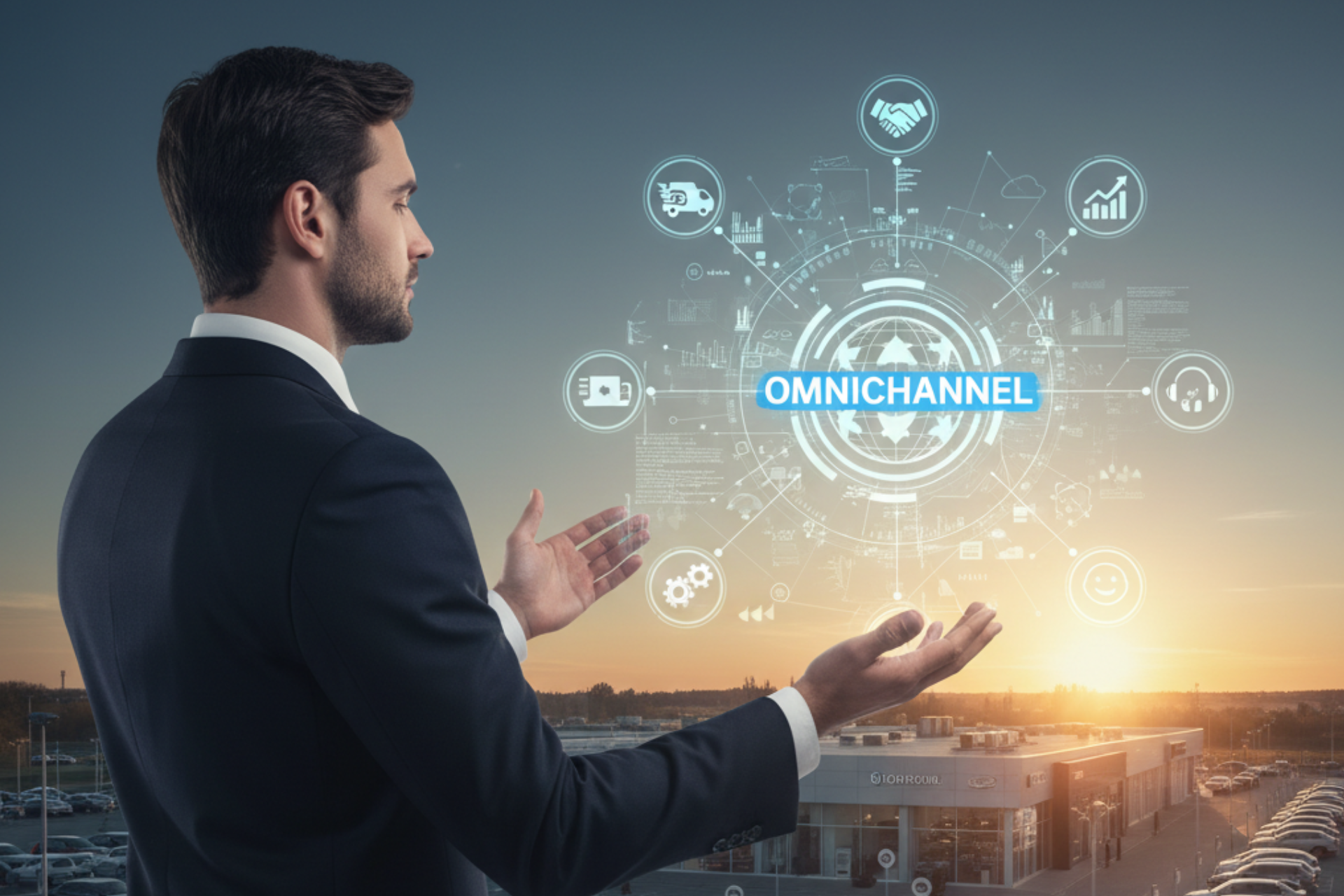
Omnichannel marketing for automotive dealerships integrates digital and physical customer touchpoints into a unified sales journey. Rather than treating online and in-store experiences as separate entities, omnichannel platforms connect websites, mobile apps, social media, email, phone calls, and showroom visits into one continuous conversation that drives foot traffic and sales.
What is Omnichannel Marketing?
Omnichannel marketing creates a seamless customer experience across all channels by maintaining consistent messaging, unified customer profiles, and coordinated campaigns. Unlike multichannel marketing—which operates channels independently—omnichannel ensures that customer interactions flow naturally from one touchpoint to another.
For automotive dealerships, this means a customer who views a vehicle on your website receives retargeting ads on social media, gets a personalized email about that specific model, and when they visit your lot, the salesperson already knows their browsing history and preferences.
Why Omnichannel is Crucial for Automotive Dealerships
The modern car buyer completes an average of 42 minutes at the dealership when their journey begins online, making digital-to-physical conversion essential. However, 43% of qualified leads are mishandled by dealerships lacking omnichannel infrastructure, representing massive lost opportunities.
Omnichannel marketing solves this by:
- Providing sales teams with complete customer context before in-person meetings
- Reducing customer friction through consistent messaging across channels
- Enabling precise attribution of marketing spend to actual showroom visits
- Increasing purchase likelihood through personalized, relevant communications
Key Principles of an Effective Omnichannel Strategy
An effective omnichannel strategy for dealerships must include:
- Unified Customer Profiles: 360-degree view combining CRM, DMS, website activity, and communication history
- Real-Time Data Synchronization: Inventory and customer data flowing instantly across all channels
- Consistent Messaging: Brand voice and promotional content maintained across digital and physical touchpoints
- Attribution Tracking: Clear measurement of which channels drive actual foot traffic, not just clicks
- Sales-Marketing Alignment: Seamless handoff between digital engagement and in-person sales conversations
Leveraging First-Party Data for Precision Marketing and Increased Foot Traffic
First-party data from your CRM and DMS represents your dealership’s most valuable marketing asset. Unlike third-party data that’s becoming increasingly restricted, first-party data provides accurate, privacy-compliant insights into actual customer behavior and preferences.
The Power of Your Dealership’s Data
Your dealership already possesses rich customer data including:
- Purchase and service history from your DMS
- Website browsing behavior and vehicle interests
- Communication preferences and response patterns
- Trade-in history and financing preferences
- Referral source and original lead quality
When properly unified, this data enables AI-powered lead scoring that identifies high-intent buyers before they even contact your dealership. Dealerships using digital tools see 25% higher close rates despite handling fewer total leads, proving that quality trumps quantity.
Building Hyper-Targeted Audiences
First-party data enables creation of highly specific audience segments:
- Service customers due for their next maintenance visit
- Past buyers approaching typical trade-in timelines (3-5 years)
- Website visitors who viewed specific vehicle categories or price ranges
- Email subscribers who engaged with recent promotional content
- Phone callers who inquired about specific models but didn’t visit
These audiences can be activated across multiple channels simultaneously:
- Retargeting display ads showing vehicles they previously viewed
- Personalized email campaigns with relevant inventory updates
- SMS notifications about price drops on vehicles of interest
- Social media ads promoting complementary services or models
Ensuring Data Privacy and Compliance
With 19 states enacting privacy laws by 2025, data privacy compliance is non-negotiable. Effective omnichannel platforms include:
- Secure APIs and advanced encryption keeping data safe at every stage
- Real-time risk monitoring and adherence to global privacy standards
- Automated opt-out mechanisms for email and SMS communications
- Customer data portability features allowing easy export upon request
Driving In-Market Shoppers to Your Dealership with Dynamic Inventory Ads
Dynamic inventory advertising automatically syncs your live dealership inventory with digital advertising platforms, ensuring that every ad showcases vehicles actually available for purchase. This eliminates wasted impressions on sold vehicles and dramatically increases conversion rates.
Showcasing Your Inventory in Real-Time
Traditional static ads often promote vehicles that have already sold, creating frustrating customer experiences and wasted marketing spend. Dynamic inventory ads solve this by:
- Automatically updating when vehicles sell or arrive on lot
- Pulling accurate pricing, features, and imagery from your DMS
- Applying custom rules based on days-on-lot, margin, or model priorities
- Ensuring consistent messaging across search, social, and display channels
The results are compelling: dynamic inventory advertising delivers 176% more leads with 49% lower cost per lead compared to traditional static ads.
Automating Ads for Specific Vehicles
Dynamic inventory platforms enable sophisticated targeting strategies:
- Aged inventory rules: Automatically increase ad spend for vehicles exceeding 30-60 days on lot
- High-margin promotion: Prioritize advertising for models with above-average profit margins
- Seasonal targeting: Adjust creative and targeting based on weather, holidays, or local events
- Competitive conquesting: Target owners of specific competitor makes and models with relevant trade-in offers
These automated rules ensure your advertising budget always focuses on your highest-priority inventory without manual intervention.
Converting Digital Views to Physical Visits
Dynamic inventory ads drive foot traffic through several mechanisms:
- Click-to-navigate functionality enabling one-tap directions to your dealership
- Real-time inventory verification building trust that advertised vehicles are actually available
- Personalized retargeting showing the exact vehicles customers previously viewed
- Mobile-optimized experiences designed for on-the-go car shoppers
For dealerships implementing automotive inventory marketing, these dynamic ads become powerful foot traffic drivers that consistently outperform static alternatives.
Smarter Social and Search Strategies for Maximum Customer Engagement and Foot Traffic
Google and Meta (Facebook/Instagram) represent the two most critical platforms for driving automotive foot traffic. Combined, they capture the majority of digital ad spend and consumer attention in the automotive space.
Optimizing Your Presence on Google and Meta
Effective Google and Meta strategies for dealerships include:
- Google Vehicle Listing Ads (VLAs): Auto-generated ads using your inventory feed that appear directly in search results
- Facebook Dynamic Ads: Carousel ads showcasing multiple vehicles from your inventory with direct links to vehicle detail pages
- Local inventory ads: Ads that highlight available inventory and include “Visit Store” buttons driving foot traffic
- Click-to-call extensions: Making it easy for mobile users to contact your dealership directly from ads
These platforms enable sophisticated targeting based on:
- Geographic proximity to your dealership
- Vehicle research behavior and interests
- Demographic and lifestyle characteristics
- Past interactions with your digital properties
Engaging Shoppers on Social Media Platforms
Social media engagement strategies that drive foot traffic include:
- Live video demonstrations of featured vehicles with real-time Q&A
- Customer testimonial content showcasing positive buying experiences
- Behind-the-scenes content highlighting your team and facility
- Interactive polls and questions engaging potential customers in conversations
The key is maintaining consistent messaging across platforms while tailoring content format to each channel’s unique strengths. Social media advertising automates this process while ensuring brand consistency and compliance.
Converting Digital Interactions into Dealership Visits
The final step in social and search strategies is converting digital engagement into physical visits:
- Appointment scheduling integration allowing customers to book test drives directly from ads
- Geo-targeted mobile ads that appear when prospects are near your dealership
- SMS follow-up sequences for users who engage with social content but don’t convert immediately
- Sales team alerts notifying staff when high-intent prospects are actively researching online
Expanding Your Reach with Video and Connected TV to Drive Foot Traffic
Connected TV (CTV) and Over-the-Top (OTT) advertising represent powerful upper-funnel channels for building brand awareness and driving later consideration. With traditional TV viewership declining and streaming adoption accelerating, CTV has become essential for automotive marketing.
The Impact of Video in Automotive Advertising
Video advertising creates emotional connections that static ads cannot match. For automotive marketing specifically, video enables:
- Showcase vehicle features and capabilities in motion
- Demonstrate interior comfort and technology systems
- Highlight safety features and performance characteristics
- Build brand storytelling that differentiates your dealership
Connected TV advertising achieves 98% completion rates for automotive campaigns, ensuring your message is seen by engaged viewers.
Targeting In-Market Buyers on CTV
Modern CTV platforms enable sophisticated targeting capabilities:
- Audience-based targeting: Reaching households based on automotive purchase intent signals
- Geographic targeting: Focusing on specific ZIP codes, neighborhoods, or drive-times to your dealership
- Retargeting: Showing CTV ads to users who previously visited your website or engaged with other digital properties
- Conquesting: Targeting households that own specific competitor makes and models
CTV and OTT through platforms like The Trade Desk enables VIN-level targeting for maximum relevance.
Measuring the Effectiveness of Video Campaigns
While CTV is primarily an upper-funnel channel, its impact on foot traffic can be measured through:
- Brand lift studies measuring increased awareness and consideration
- Geo-lift analysis comparing foot traffic in exposed vs. non-exposed areas
- Cross-device attribution tracking CTV viewers who later visit your website or dealership
- Sales match-back connecting CTV exposure to actual vehicle purchases
Localizing Your Digital Presence: Foot Traffic Strategies for Specific Geographies
Local marketing remains the foundation of automotive retail success. Even in an increasingly digital world, car buyers ultimately purchase from dealerships within their geographic convenience zone.
Pinpointing Customers in Your Local Market
Effective local targeting strategies include:
- Geo-fencing: Creating virtual boundaries around your dealership, competitor lots, and high-traffic retail areas
- Radius targeting: Focusing advertising within specific drive-times (15, 30, 45 minutes) from your location
- Demographic targeting: Reaching households that match your ideal customer profile within your trade area
- Behavioral targeting: Focusing on consumers with demonstrated automotive purchase intent in your market
Geo-fencing for conquest like at competitor dealerships and high-traffic retail areas generates significant foot traffic through targeted campaigns.
Using DOOH to Capture Local Attention
Digital Out-of-Home (DOOH) advertising bridges digital precision with physical presence:
- Programmatic DOOH: Automated buying of digital billboards near your dealership
- Geo-fenced targeting: Showing ads on boards when target audiences are nearby
- Dynamic creative: Automatically updating messaging based on inventory, weather, or events
- Cross-channel integration: Coordinating DOOH with mobile and social campaigns for maximum impact
DOOH solutions tie first-party data to programmatic boards for event-based promotions and local conquesting.
Optimizing for ‘Near Me’ Searches
Local SEO and “near me” search optimization remains critical:
- Google Business Profile optimization with accurate hours, inventory, and contact information
- Local keyword targeting in paid search campaigns (e.g., “Toyota dealer near me”)
- Location-specific landing pages for different neighborhoods or regions you serve
- Review management ensuring positive online reputation in local search results
Measuring Success Beyond Clicks: Tying Omnichannel Efforts to Dealership Foot Traffic
Traditional digital marketing metrics like clicks and impressions fail to capture the true impact of automotive marketing. Omnichannel success requires attribution models that connect digital engagement to physical dealership visits and actual sales.
Understanding True Campaign Performance
Effective attribution for automotive dealerships includes:
- Walk-in attribution: Tracking which digital campaigns actually drive showroom visits through geofencing and mobile location data
- Sales match-back: Connecting marketing touchpoints to actual vehicle purchases through CRM integration
- Cost-per-visit: Measuring advertising efficiency based on actual foot traffic generated, not just digital engagement
- Customer lifetime value: Evaluating marketing ROI based on total profit from each acquired customer
Proprietary attribution reporting provides ad influence insights and purchase tracking that traditional vendors cannot match.
Connecting Digital Spend to Dealership Sales
Advanced measurement capabilities include:
- Multi-touch attribution: Understanding how different channels work together across the customer journey
- Incrementality testing: Measuring the true causal impact of marketing campaigns beyond natural demand
- Competitive benchmarking: Comparing your performance against similar dealerships in your market
- Real-time optimization: Adjusting campaigns daily based on actual performance data rather than lagging indicators
Optimizing for Continuous Growth
Data-driven optimization strategies include:
- Budget reallocation from underperforming to high-ROI channels based on foot traffic attribution
- Creative testing using AI to identify messaging that drives the highest visit-to-sale conversion
- Audience refinement continuously improving targeting based on actual customer characteristics
- Seasonal adjustments optimizing spend based on historical performance patterns and market conditions
Bridging the Gap: How Omnichannel Creates Authentic Connections and Drives Dealership Visits
Omnichannel marketing succeeds not just through technical integration, but by creating authentic human connections that build trust and drive loyalty. In an industry where 75% of customers report high satisfaction with their buying experience, the human element remains paramount.
Fostering Trust in Diverse Markets
Multicultural marketing expertise helps dealerships connect authentically with diverse communities. With over 10 years of experience reaching multicultural audiences, this approach ensures campaigns resonate with cultural values and preferences rather than using generic messaging.
Creating a Seamless Customer Journey
The omnichannel customer journey flows naturally across touchpoints:
- Awareness: Customer sees CTV ad or social media content about your dealership
- Consideration: Customer visits website, views specific vehicles, and engages with content
- Intent: Customer receives retargeting ads, personalized emails, and SMS messages
- Decision: Customer visits dealership with complete context provided to sales team
- Loyalty: Post-purchase engagement maintains relationship for service and future purchases
Each step builds upon the previous one, creating a cohesive experience that feels personal rather than fragmented.
Building Loyalty for Repeat Business
Omnichannel strategies extend beyond the initial sale to build long-term loyalty:
- Service reminders based on actual vehicle usage and maintenance schedules
- Trade-in timing alerts when customers approach optimal replacement cycles
- Referral programs incentivizing satisfied customers to refer friends and family
- Exclusive offers for past customers creating ongoing value beyond the initial purchase
How Demand Local Simplifies Omnichannel Foot Traffic Generation
Demand Local’s omnichannel platform takes the complexity out of driving foot traffic through integrated solutions designed specifically for automotive dealerships. Their LinkOne Data platform unifies CRM, DMS, and inventory feeds into a single platform that powers precision-targeted campaigns across search, social, video, and connected TV.
The platform’s dynamic inventory advertising automatically syncs with your DMS, ensuring that every ad showcases available vehicles with accurate pricing and imagery. This eliminates wasted impressions and dramatically increases conversion rates, delivering measurable foot traffic from digital campaigns.
What sets Demand Local apart is their automotive-specific expertise combined with multicultural marketing capabilities that help dealerships connect authentically with diverse communities. Their geofencing and DOOH solutions provide verified walk-in attribution, while their CTV and OTT advertising builds brand awareness that drives later showroom visits.
With proprietary attribution reporting that ties digital spend to actual sales and foot traffic, Demand Local eliminates the guesswork from automotive marketing. Their dedicated account teams ensure campaigns meet both performance goals and compliance requirements, making them an ideal partner for dealerships serious about driving measurable in-person visits.
FAQs on Using Omnichannel to Drive Foot Traffic to Dealerships
Q: What is the primary difference between multichannel and omnichannel marketing for a car dealership?
A: Multichannel marketing operates each channel (website, social media, email, etc.) independently with separate strategies and messaging. Omnichannel marketing integrates all channels into a unified customer journey where interactions flow seamlessly from one touchpoint to another. For dealerships, this means a customer who views a vehicle online receives coordinated follow-up across channels, and when they visit the lot, the salesperson has complete context about their digital interactions. Omnichannel dealerships achieve 67% positive gross profit impact and 80% higher close rates compared to multichannel approaches.
Q: How can I use my existing customer data to specifically increase foot traffic to my dealership?
A: Your existing CRM and DMS data can drive foot traffic through several strategies: create lookalike audiences based on your best customers, retarget service customers approaching trade-in timelines, send personalized invitations to past buyers for new model launches, and use geofencing to target customers when they’re near your dealership. AI-powered lead scoring helps prioritize high-intent prospects, ensuring your sales team focuses on customers most likely to visit and purchase.
Q: What kind of ROI can I expect from implementing an omnichannel strategy for my dealership?
A: Omnichannel dealerships see significant ROI improvements: 67% positive gross profit impact and 80% higher close rates, plus 176% more leads with 49% lower cost per lead from dynamic inventory advertising. Dealerships using AI-powered platforms are 65% more likely to exceed sales goals. Advanced customer engagement tools drive an increase in repeat buyers and stronger long-term loyalty.
Q: How quickly can a dealership implement an omnichannel marketing campaign to see results?
A: Full omnichannel implementation requires 60-90 days for complete optimization, but measurable results appear much sooner. Walk-in increases from geofencing and retargeting campaigns typically become visible within 30-45 days. AI lead scoring shows improved close rates within 60-90 days as the system learns from your specific customer patterns.
Q: Are there specific ad formats that are most effective for driving in-person dealership visits?
A: The most effective ad formats for driving foot traffic include dynamic inventory ads with click-to-navigate functionality, geofenced mobile ads that appear when prospects are near your dealership, and local inventory ads with “Visit Store” buttons. Connected TV campaigns build brand awareness for later consideration, achieving 98% completion rates for automotive ads, while dynamic inventory advertising delivers the highest direct response rates.
Q: How does Demand Local ensure data privacy while using customer data for targeting?
A: Demand Local prioritizes data security with secure APIs and advanced encryption keeping customer data safe at every stage. Their platform includes real-time risk monitoring and adherence to global privacy standards, ensuring compliance with the 19 states that have enacted privacy laws by 2025. All data activation occurs through privacy-safe methods that maintain customer trust while enabling precise targeting.